Dark matter research, open to the public.
Most of the matter in the universe cannot be seen. LARC maps it through the light of distant quasars, and this experience lets the public follow that evidence themselves.
LARC, the Lyman-Alpha Forest Research Collaboration, is a cosmology collaboration of USC, UC Riverside and Carnegie Science Observatories, funded by a Templeton Foundation grant. It studies the Lyman-alpha forest: the absorption lines that hydrogen between galaxies leaves in the light of distant quasars. Those lines map the gas along each line of sight, and with it the dark matter that decides where the gas can collect.
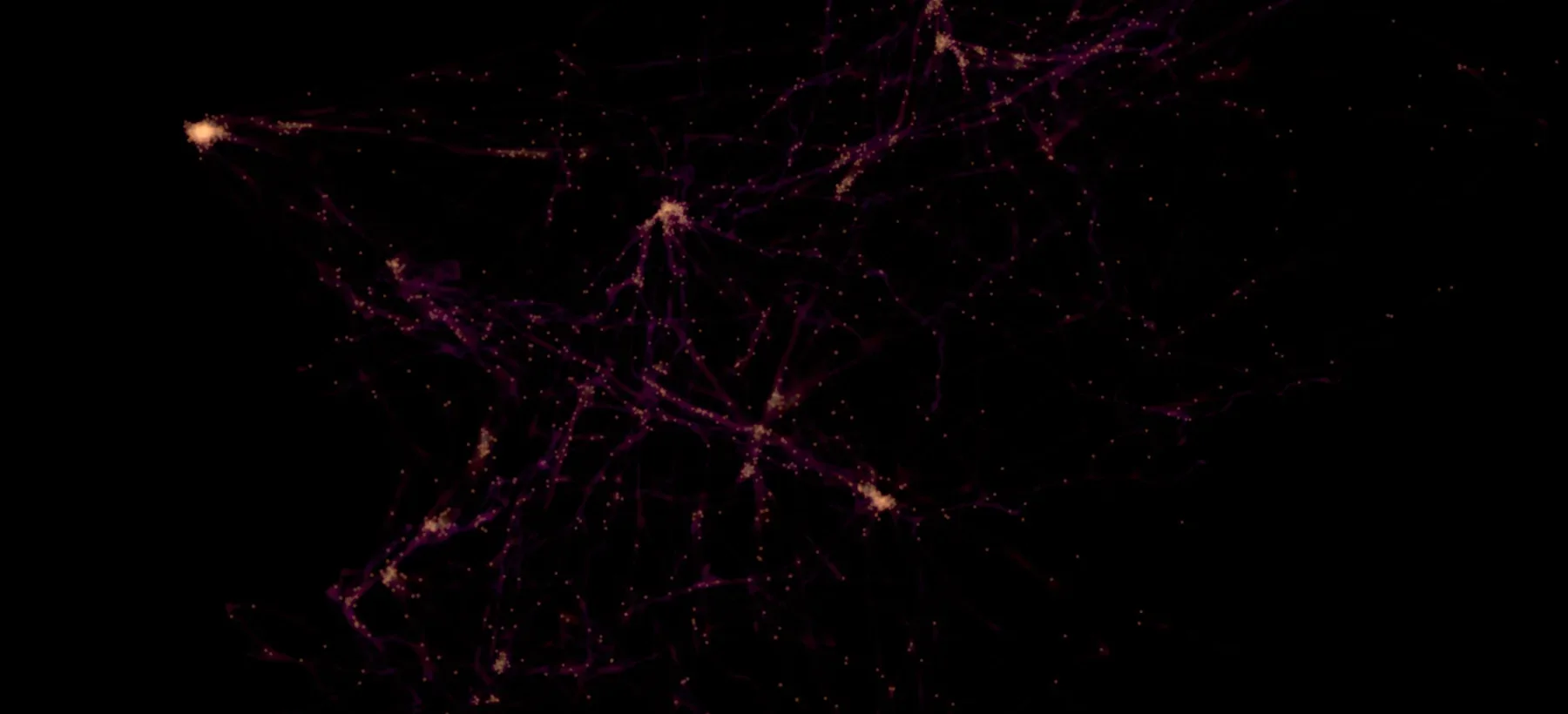
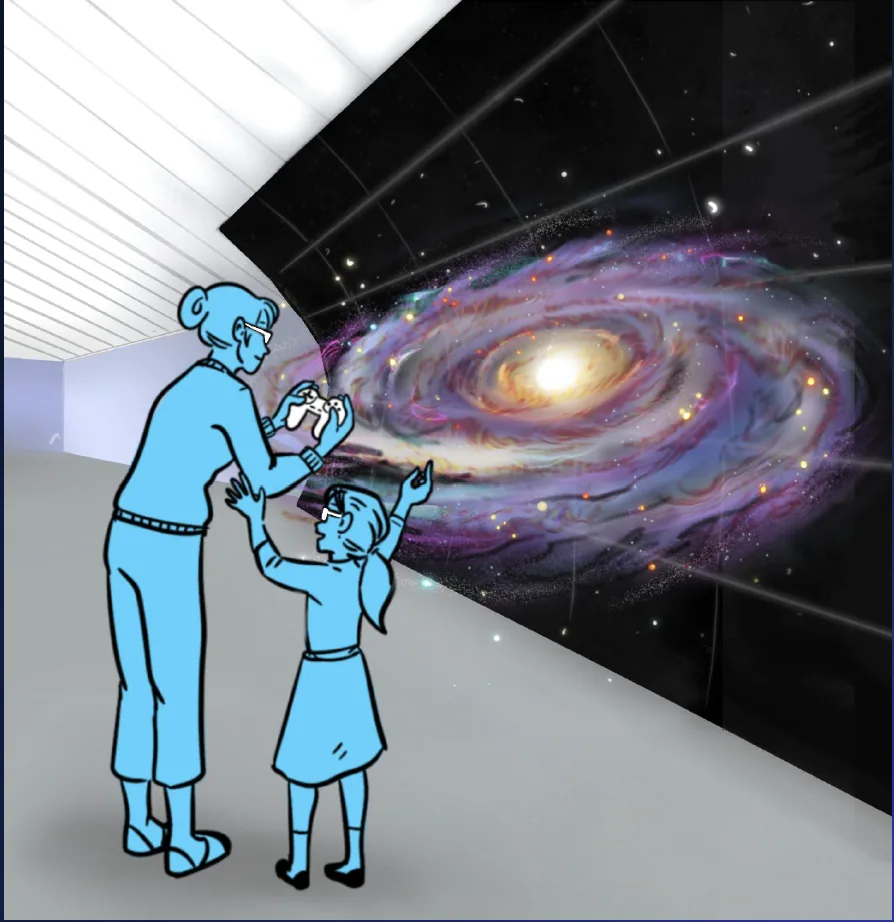
The Dark Matter Interactive Experience brings that research to the public. It is being built for Carnegie Science Observatories' large-format display in Pasadena, which shows it in stereoscopic 3D: a visitor wearing 3D glasses sees the universe in depth. A visitor travels as light that left a quasar about twelve billion years ago, on its way to Earth, and watches the hydrogen it passes through write the Lyman-alpha forest into its spectrum.
Its value to the public
Dark matter is one of the hardest ideas in science to explain to a public audience. The evidence for it is indirect, read from light and gas, and a picture that looks convincing can easily mislead. Text, still images and diagrams struggle with something known only through what it does to things you can see. Here visitors act on it and watch the effect, in a public observatory, with every visual decision checked by the scientists who study it.
The way the experience is made is meant to carry over, as a working model for serious games and simulations about things people cannot see directly. What carries over is set out under Research.
Designing the experience as a game.
I designed the whole experience as an interactive game. I build the procedural generation of the simulated universes, and the simulation and visualisation of how dark matter shapes intergalactic gas and the Lyman-alpha spectrum. I ran the playtests and redesigned the onboarding from what they showed. I also coordinate between the scientists and the designers, run the project meetings, and prepare progress material for the research team and the Templeton Foundation.
The build is team work at USC, supervised by Sean Bouchard and Martzi Campos at the USC School of Cinematic Arts. The science, and the review of every visual decision, comes from the LARC researchers. The astrophysics and the LARC research programme are not mine.
What I study here is how to make an invisible cause understandable through play: what a visitor is allowed to change, and when they are given the control.
From prepared physics to a curved wall in 3D.
The experience runs in Unity on the VizLab display wall, played with a gamepad. The science that is costly to compute is prepared before the experience runs, and played back as the visitor travels.
The journey
The visitor travels as light along one route: away from the quasar, through clouds of hydrogen and the cosmic web, past a galaxy, into the Milky Way and the solar system, and down to Earth. Each stage is its own scene, and a gate at its end hands over to the next. One script owns the timing of every change, so the world, the sky, the speed and the spectrum all change on the same frame, while a camera move covers the view.
- Quasar
- Hydrogen clouds
- Cosmic web
- A galaxy
- Milky Way
- Solar system
- Earth
Drag the light from the quasar toward Earth.
Shorter wavelengthsLyman-alphaLonger wavelengths
The spectrum
On the display, the visitor carries the light's spectrum with them. It follows one quasar's light from emission to Earth, set at the distance of a quasar used in a classic figure of the Lyman-alpha forest. The physics is computed beforehand, from standard cosmology and measured hydrogen absorption, and played back as the visitor travels. The emission peak slides to longer wavelengths as space stretches the light, and each cloud of hydrogen cuts a line into it. The individual clouds are generated, and their average absorption matches measurements. At Earth, the spectrum settles on the familiar figure. I worked on the spectrum system with the team.
Gas and dark matter
The cosmic web is drawn with particle systems and volumetric gas, and I worked out how to bring gas volumes made in Houdini into Unity. Dark matter is kept as its own layer, separate from the galaxies and the gas, so that the visitor can bring it into view and change it.
The display
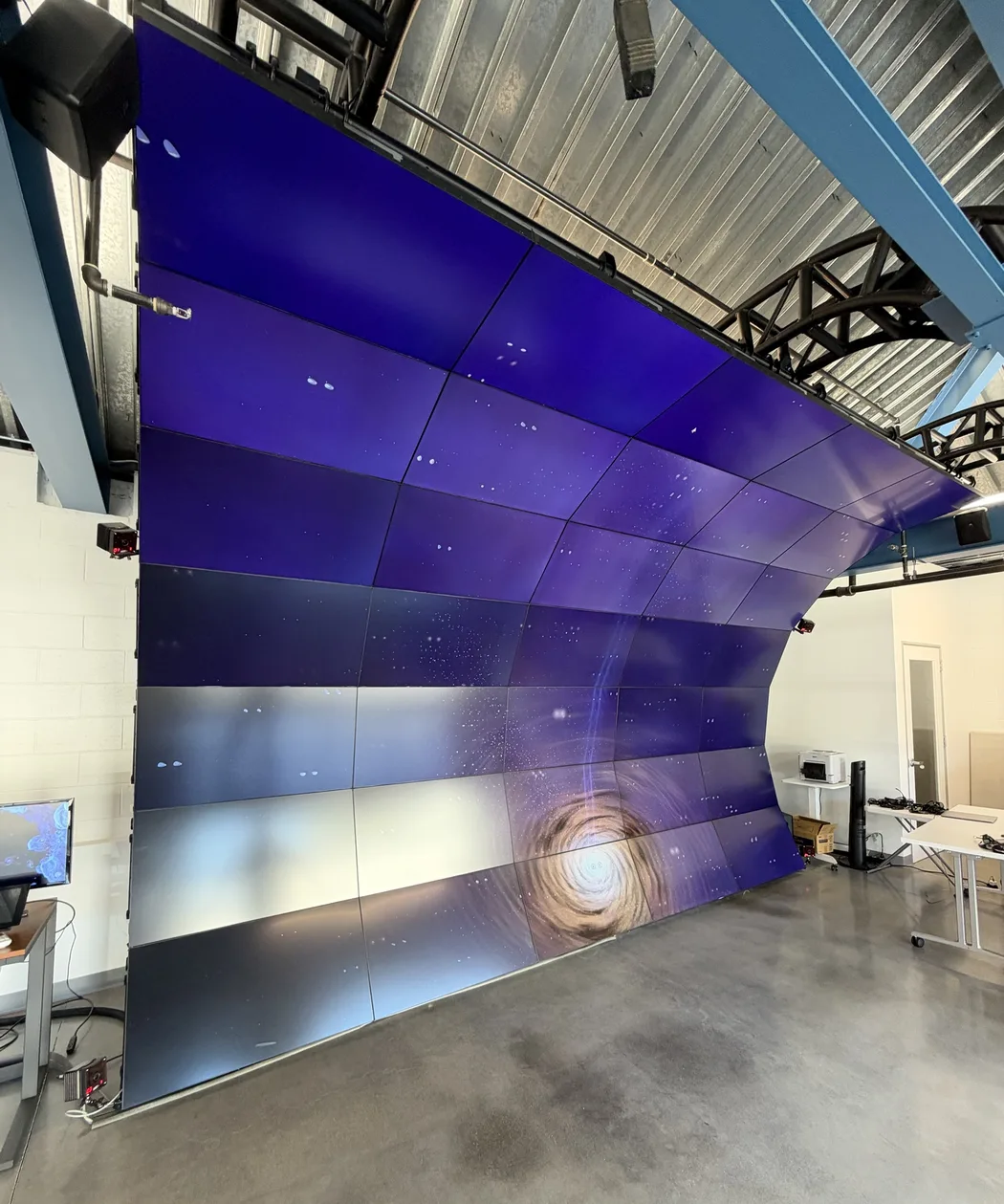
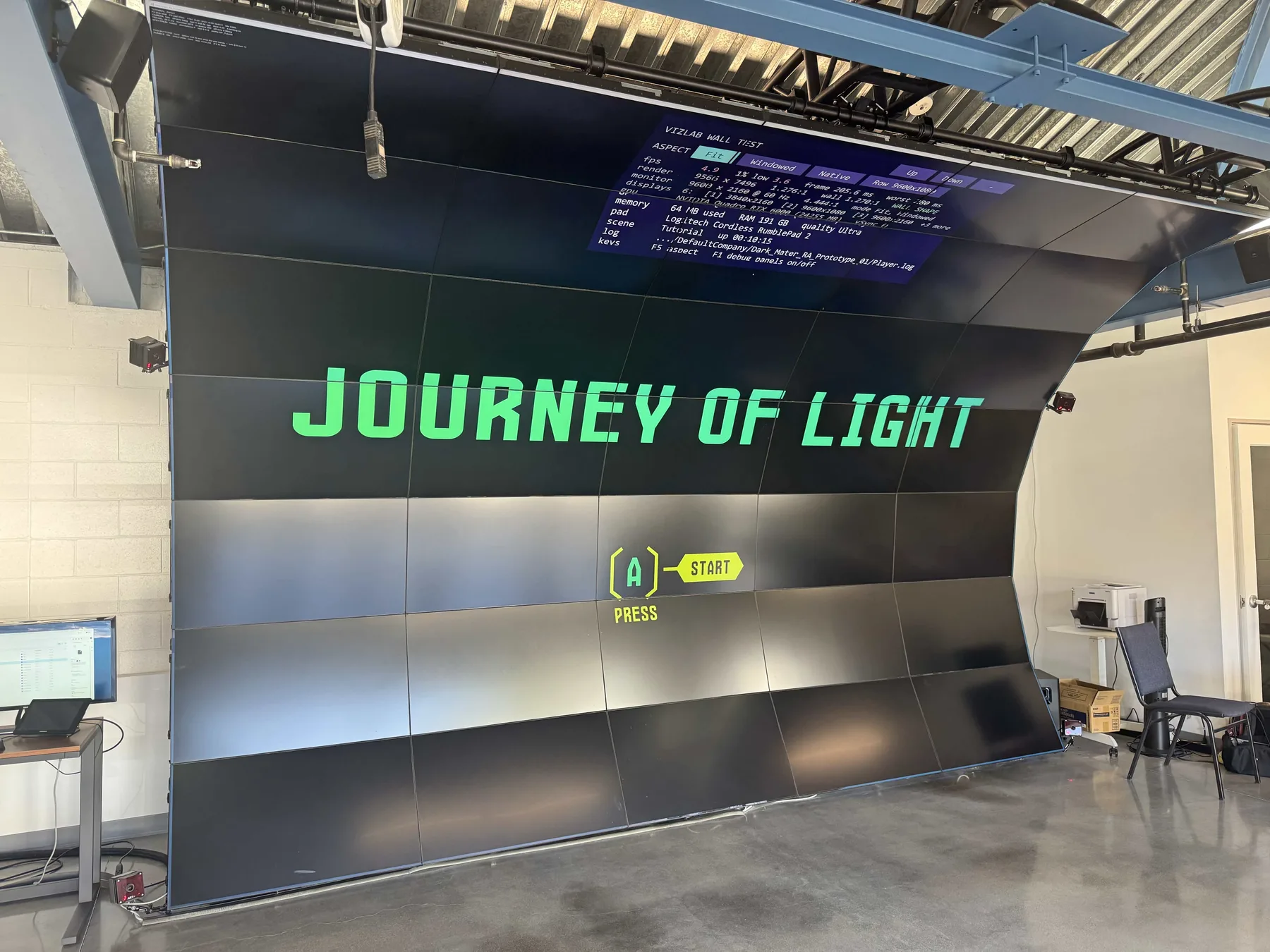
The VizLab display wall is 35 screens, seven rows of five, that curve vertically through about 124 degrees, from the floor in front of the visitor to almost overhead. It runs in stereoscopic 3D through getReal3D for Unity, so a visitor wearing 3D glasses sees the gas, the galaxies and the light's path in depth. Text sized for a flat screen stretches across that curve. The row at eye level stands nearly vertical, so persistent text goes there, and everything else lives in the scene. The visitor looks around the light while a camera follows behind it.
Showing an invisible cause.
The design rests on one fact from the science: dark matter is known only through what it does to things you can see. Visitors first meet it through its effects, the gas it gathers and the lines that gas leaves in the light, before they are shown it or given control of it. The experience also has to stay scientifically grounded while being clear to a visitor with no background in the subject. These two pull against each other in nearly every design decision, so I work them out directly with the scientists.
The playtest
In May 2026 we ran the first playtest in the lab with 20 participants, comparing two builds, A and B, with a questionnaire and in-game metrics. I booked the sessions, wrote the questionnaire and added the metrics to the build.
- Participants
- 20
- Builds compared
- A and B
- Did not fully understand the dark matter control
- 12 of 20
The science in the piece was accurate. The problem was the order: visitors were handed the control before they knew what it stood for. The session notes also show pop-up text going by too fast to read, a Lyman-alpha forest graph most could not read, confusion over the camera and the direction of travel, and too many new ideas at once: quasar, light-year, Lyman-alpha, dark matter. People enjoyed free camera play most.
The redesign
The onboarding was rebuilt around cause and effect. It starts before the light leaves the quasar and goes through one chain step by step. The invisible structure is posed as an open question before the visitor is given the dark matter control.
Dark matter control
A toggle, handed over early
A slider, handed over after the question
Movement
A move stick and a free camera
Look only, with a camera that follows the light
The journey
Included gravitational lensing
Lensing removed, after feedback from the scientists
The revised order has not yet been playtested. It is being reviewed with the scientists, and the next playtest will test it.
A model for other serious games
The project is also a working model for serious games and simulations about things people cannot observe directly. What carries over is the way it is made.
Science prepared with the scientists
What is costly to compute is worked out beforehand from published data, and the scientists review every visual decision.
The question before the control
The game poses the question a control answers before it hands the control over.
Playtests that check understanding
Sessions measure whether visitors understood what they changed, as well as whether they enjoyed it.
Simplifications that are named
Where the picture departs from the physics, the choice is made with the scientists and stated.
The current build.
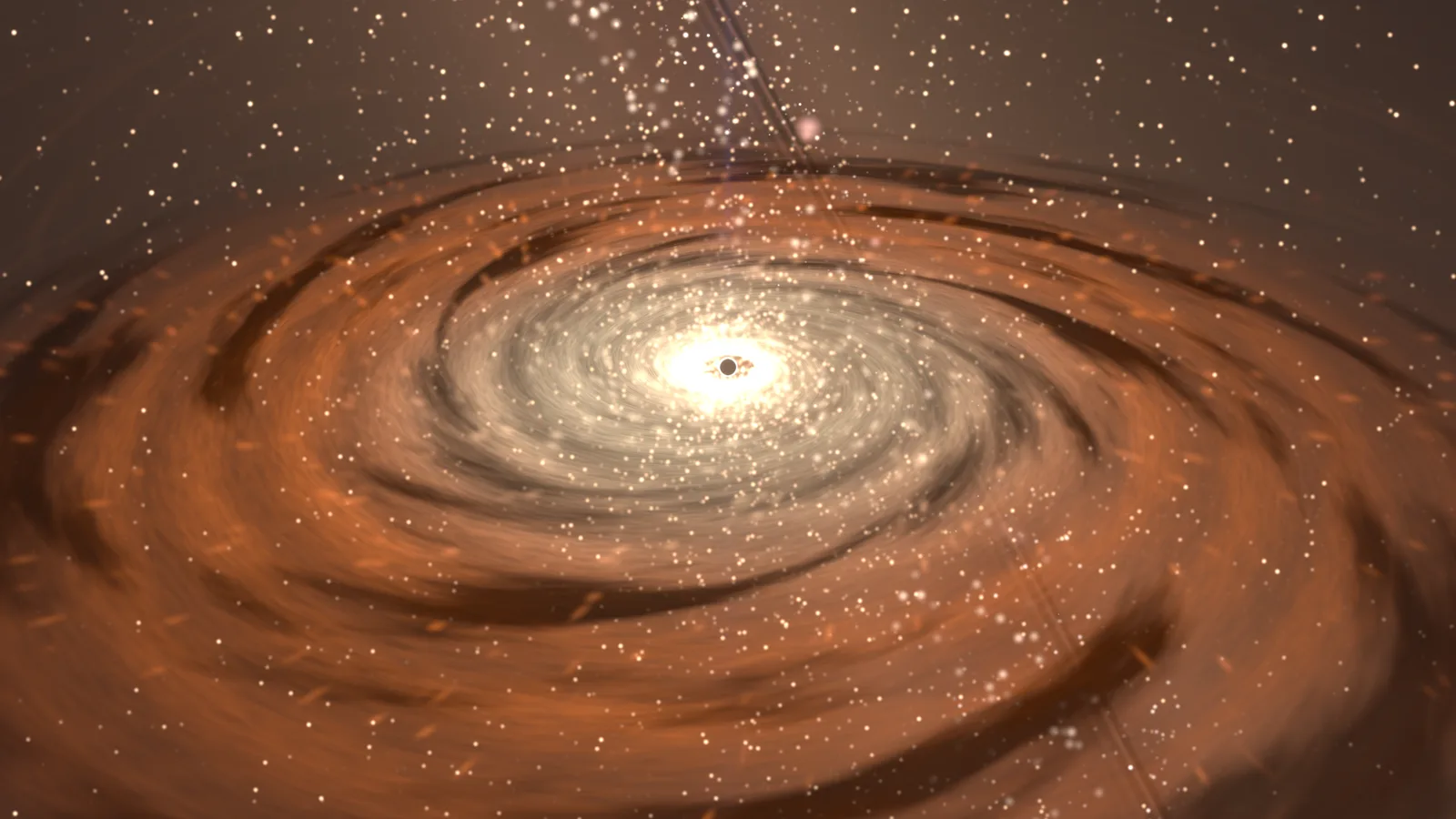
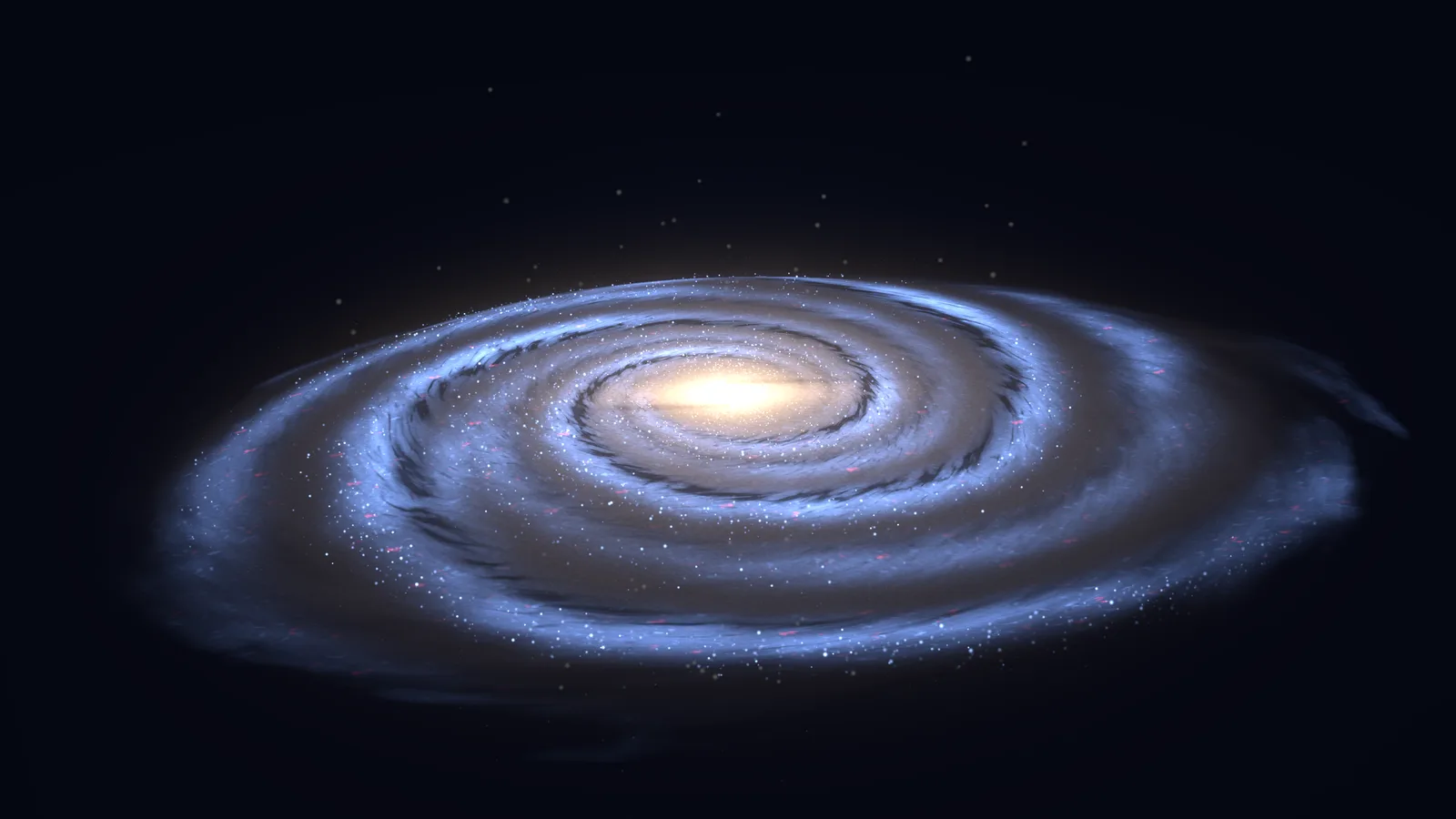
Captures from the current build in Unity.
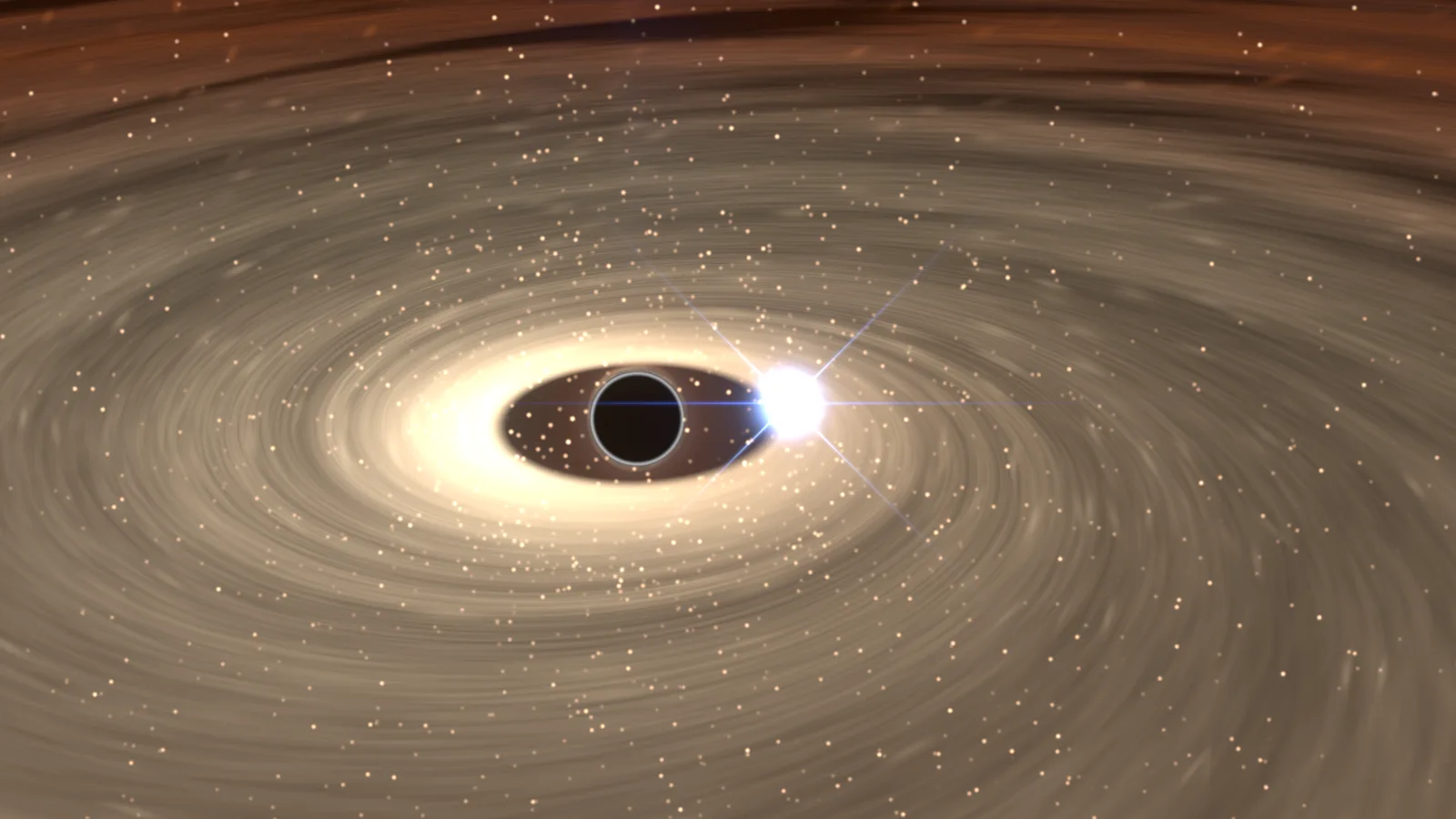
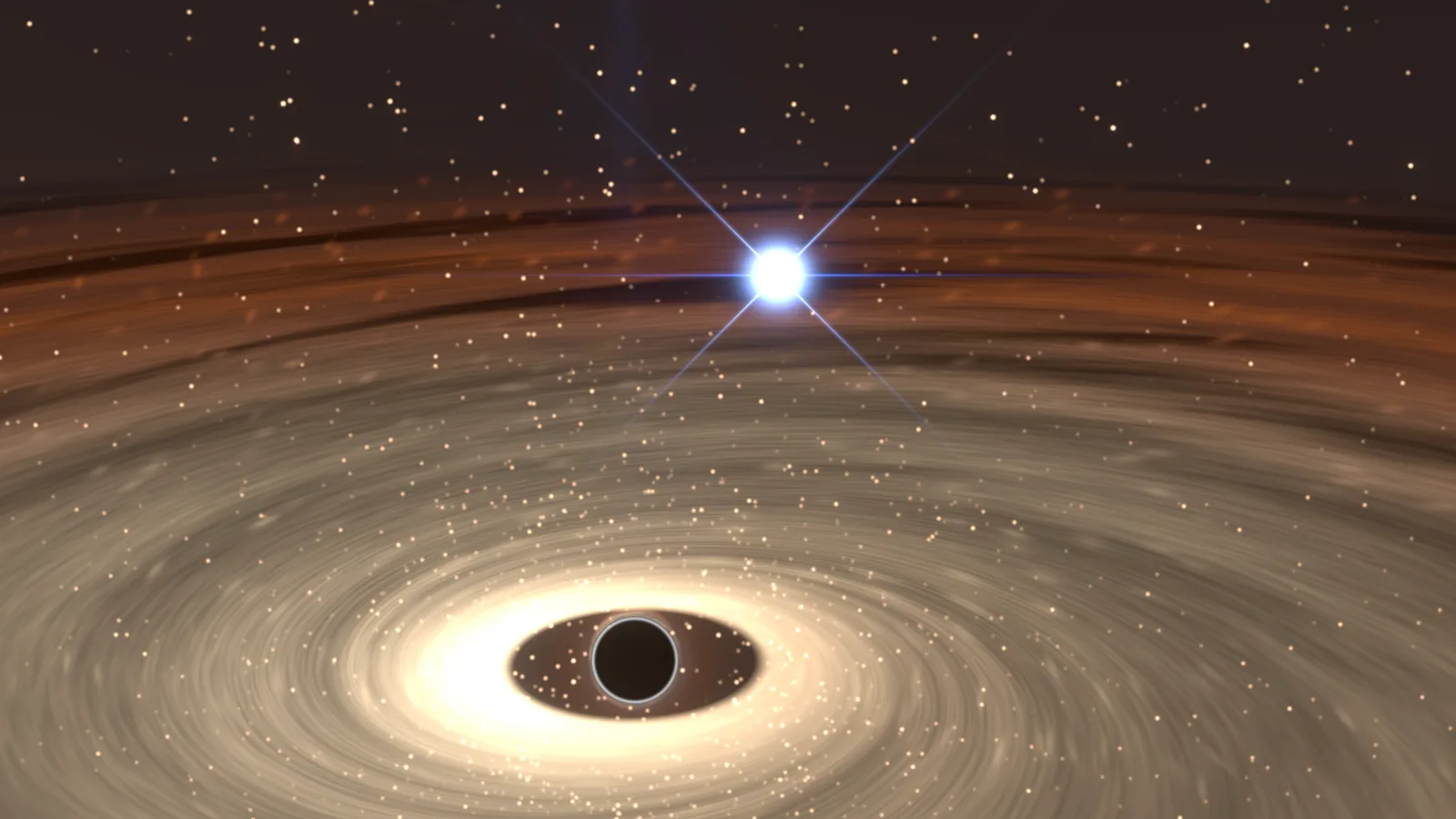
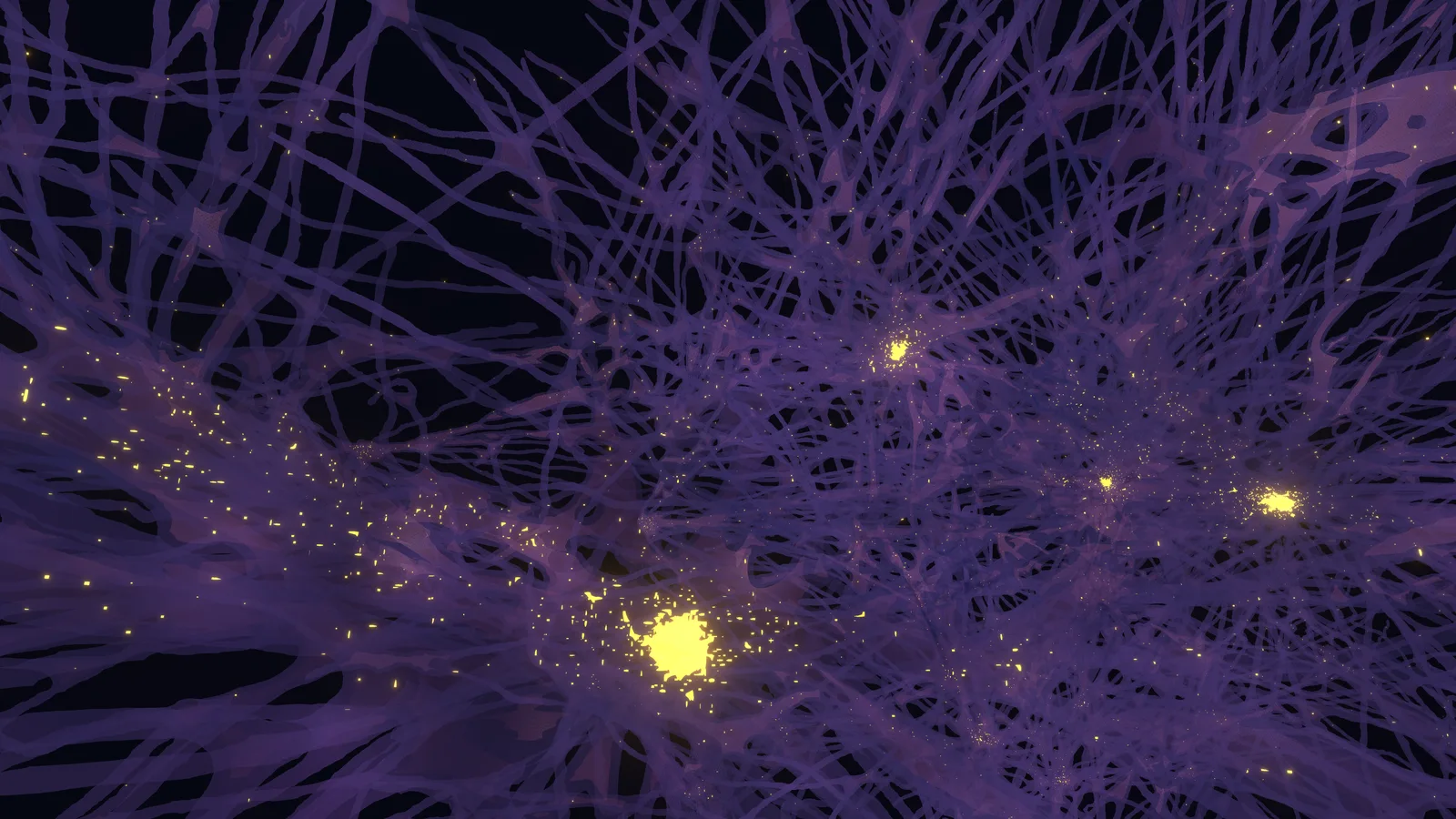
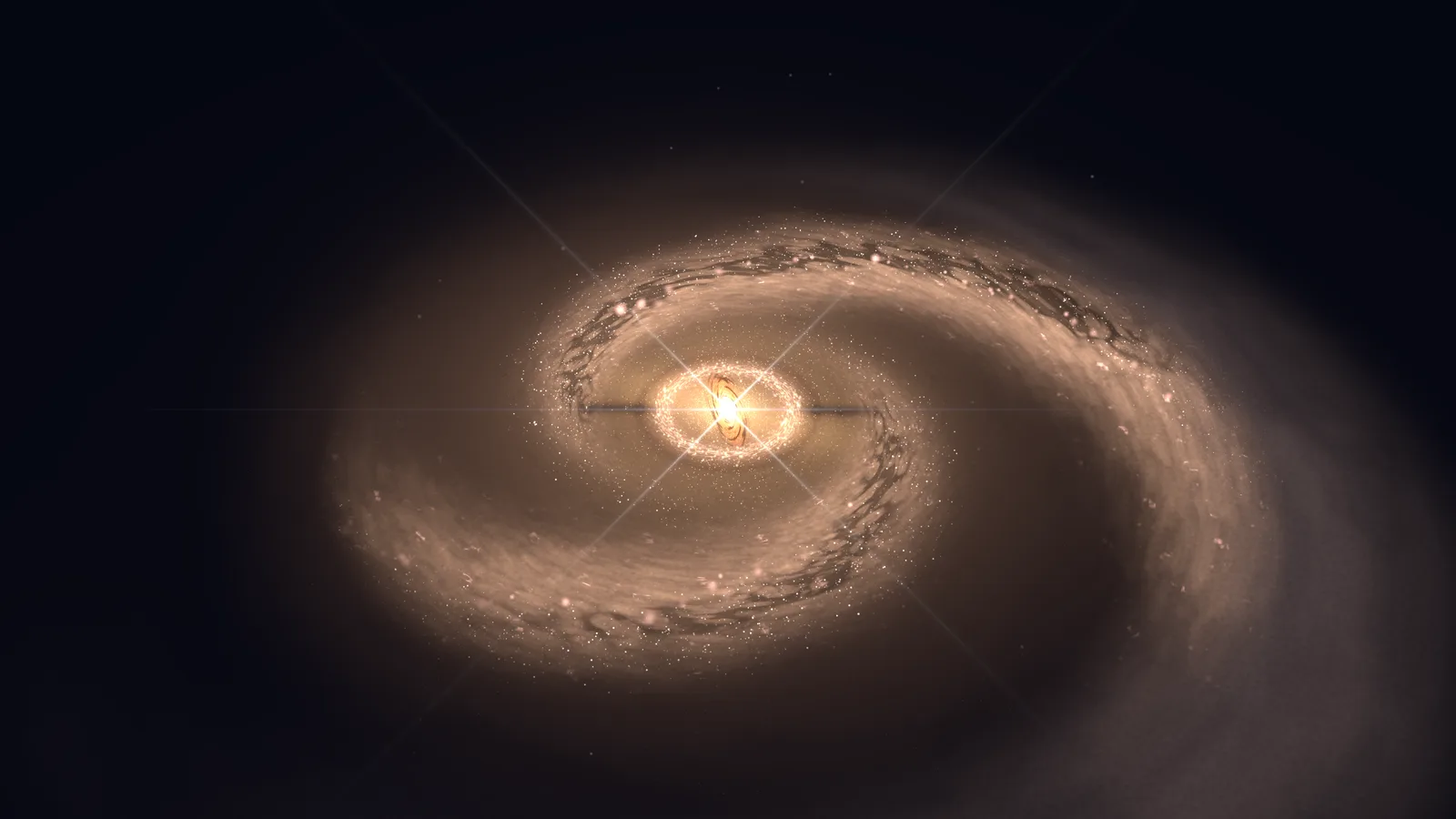
A public installation in Pasadena.
The build reached alpha in October 2026 and is being refined through regular reviews with the scientists.
The larger goal is a public installation on Carnegie Science Observatories' display in Pasadena that brings LARC's dark matter research to a wide audience, with a web-based game that carries the same material beyond the venue. The team is also making smaller interactives to sit beside it, such as a galaxy whose dark matter can be switched on and off, and a VR version is under discussion as a later step.
Planned outputs
- A public interactive installation on Carnegie Science Observatories' display in Pasadena.
- A web-based game extending the same material beyond the venue.
- A paper on translating cosmological simulation into a public interactive experience, in preparation.
Technical appendix: the spectrum, the display, and the science constraint
The spectrum, in more detail
The quasar is set at redshift 3.62, the redshift of Q1422+2309, so the light left it about 12 billion years ago, under two billion years after the Big Bang. The light is followed step by step in the editor: emitted with a typical quasar spectrum, stretched by the expansion of space using Planck 2018 cosmology, and absorbed by hydrogen along the path at the measured average rate for each redshift. Every step is stored, and during the experience the display only reads the stored step for the current moment. Some of the inputs are still being checked against the papers they come from.
Real time on a curved wall
The large format changes the engineering. Fill rate becomes the main constraint, since every frame is drawn once for each eye, motion that is comfortable on a laptop can cause nausea at scale, and text sized for a monitor cannot be read from where visitors stand. Volumetric gas is costly, so only one cluster of it is drawn as a volume at a time, and distant clouds are drawn as flat images.
Scientific accuracy
The scientists review every visual decision. Typical risks are colour scales that imply a quantity that is not there, particle densities chosen for legibility instead of the model, and time compression that makes structure formation look faster than any physical process. Much of the work is deciding which simplifications are acceptable, and saying so where they are made.