Utopia, and how children learn through play.
The world inside the crystal ball
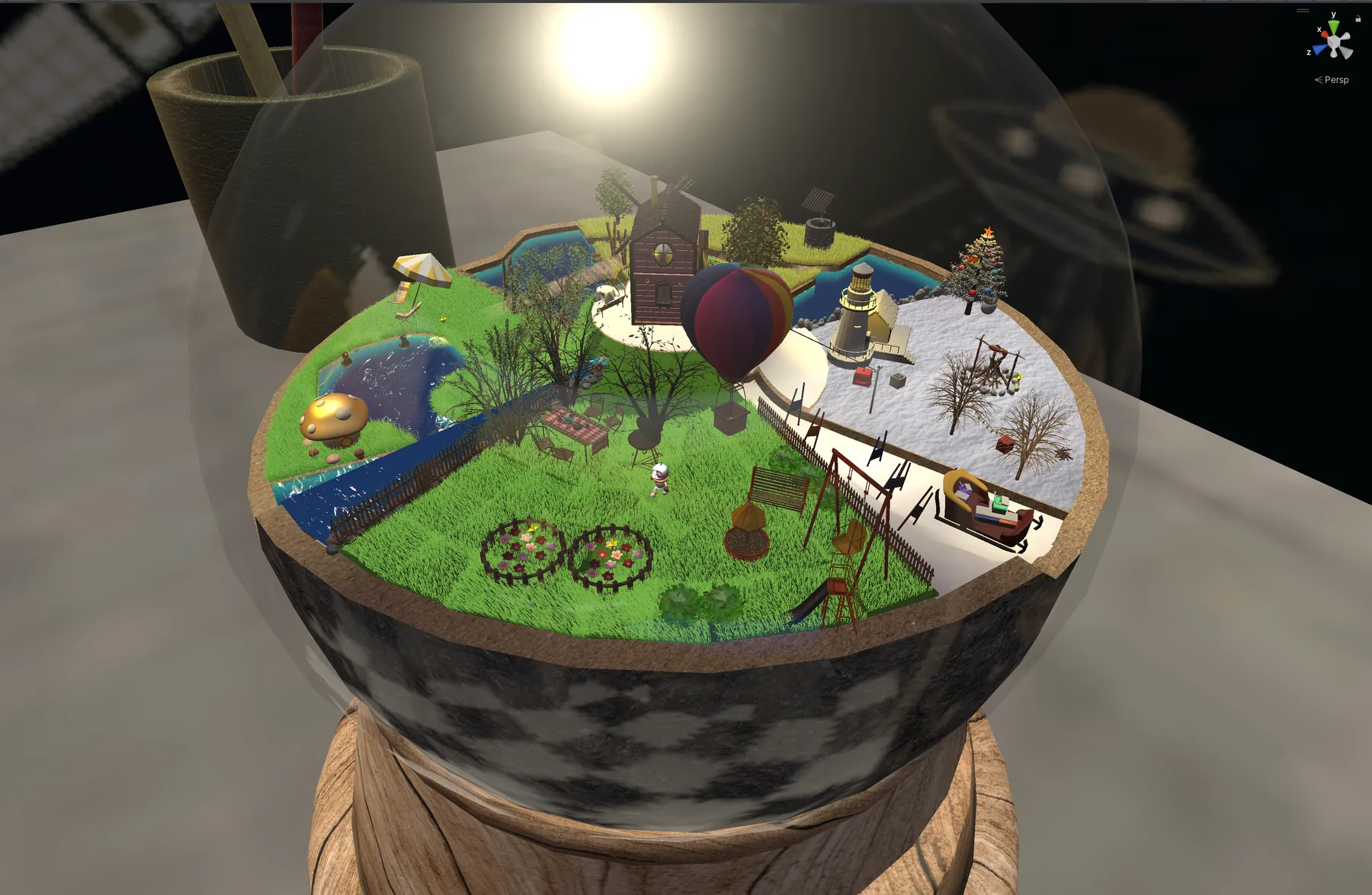
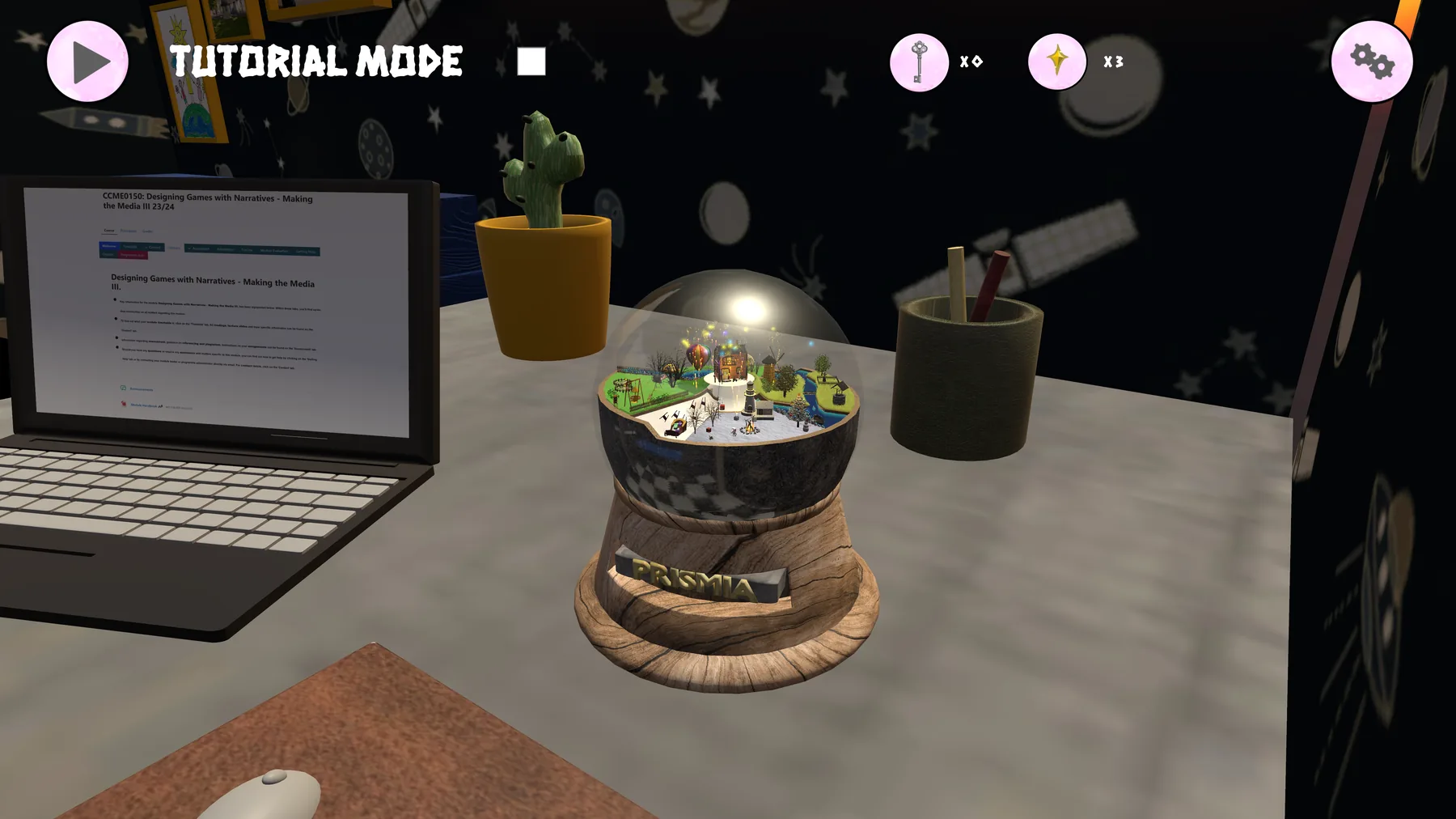
The central theme is escape into a utopia inside a magical crystal ball. The game sets a calm, nature-filled utopia against the constraints of real life, around the theme of whether challenge is necessary for growth. The ball stands for memory, hope and imagination: a paradise the protagonist eventually has to leave.
Children's games and education
- Educational goals: learning through exploration, problem-solving and environmental storytelling. Each season-themed level presents natural puzzles that teach about nature, sustainability and cooperation without stating it.
- Child development: research into cognitive development informed the simple, intuitive mechanics. Point-and-click interaction lets children engage with puzzles while building logical thinking, memory and environmental awareness.
- Narrative-driven learning: an adult is transformed into a child inside the game, so the player learns empathy and adaptability through the protagonist's adventure.
Following reader-response theory, the game leaves its meaning open to each player's own experience, which also makes it work for adults.
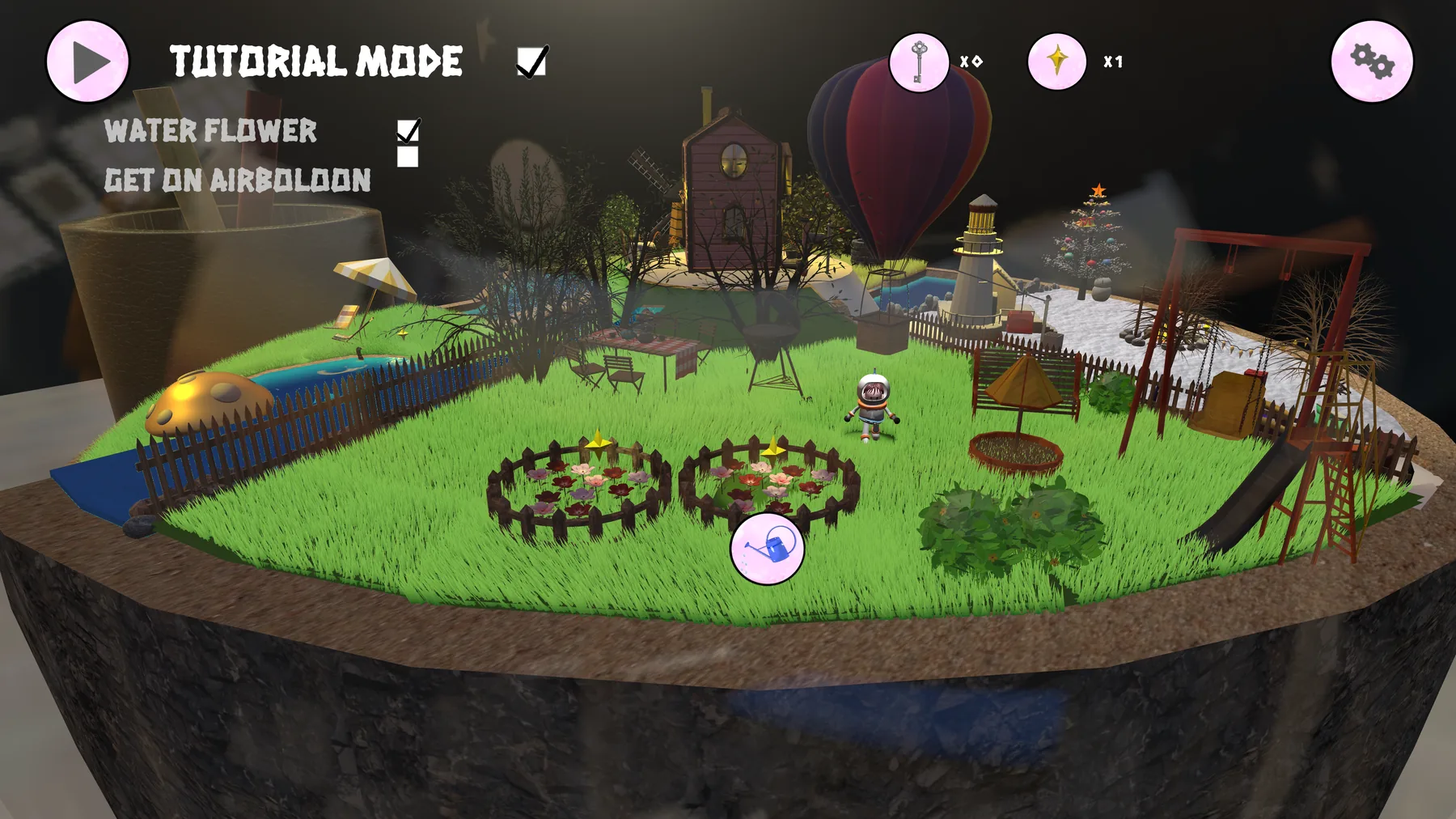
A game on the surface of a sphere.
Mechanics
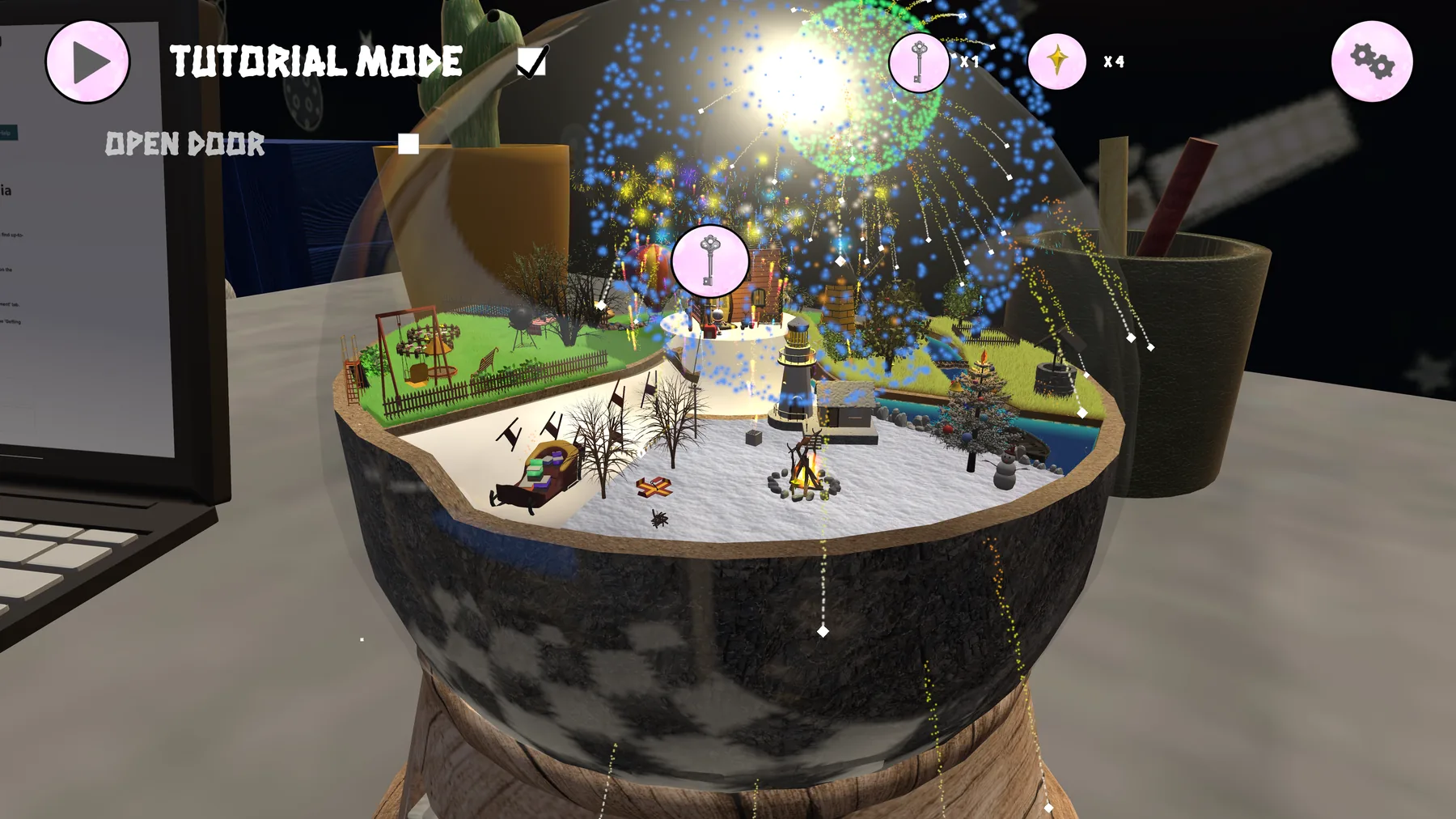
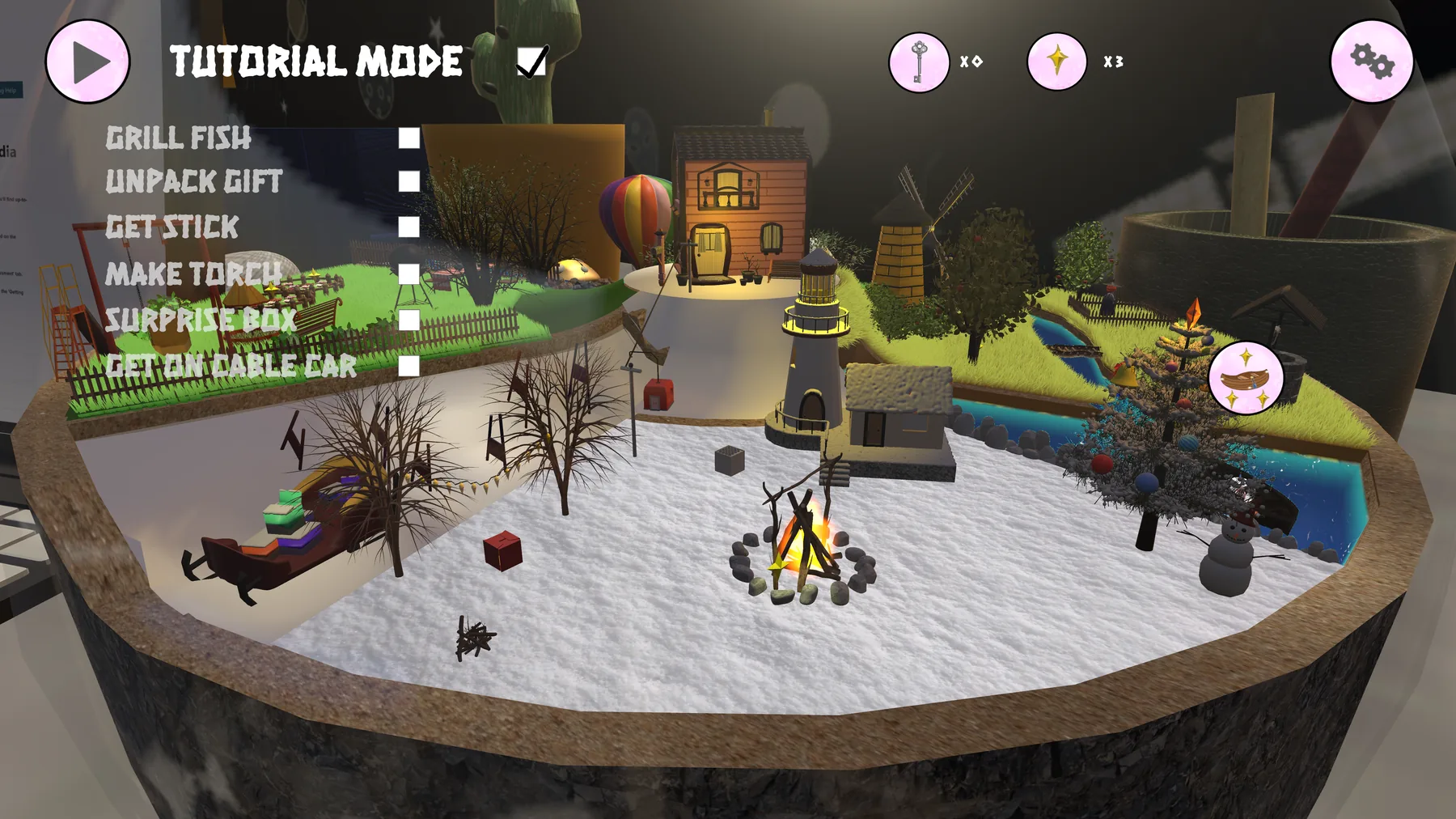
Four seasonal scenes divide the crystal ball. Players collect stars through narrative-driven linear levels (watering flowers, fishing, setting off fireworks) to unlock a final surprise. UI buttons appear next to interactable items instead of staying on screen. Left click interacts, right click rotates and scroll zooms.
The seasons follow a planned emotional arc: excitement in spring, calm in summer, peacefulness in autumn and joy in winter.
Level design on a sphere

Building terrain-based levels on a spherical surface was the hardest constraint in the project, because each level had to balance gameplay, visual clarity and technical feasibility. The sphere stands for the crystal ball and lets the four seasons share one continuous world.
Camera
- First and third person were discarded, since both break the feeling of being outside looking in.
- Top-down was rejected because it shows every level at once and removes discovery.
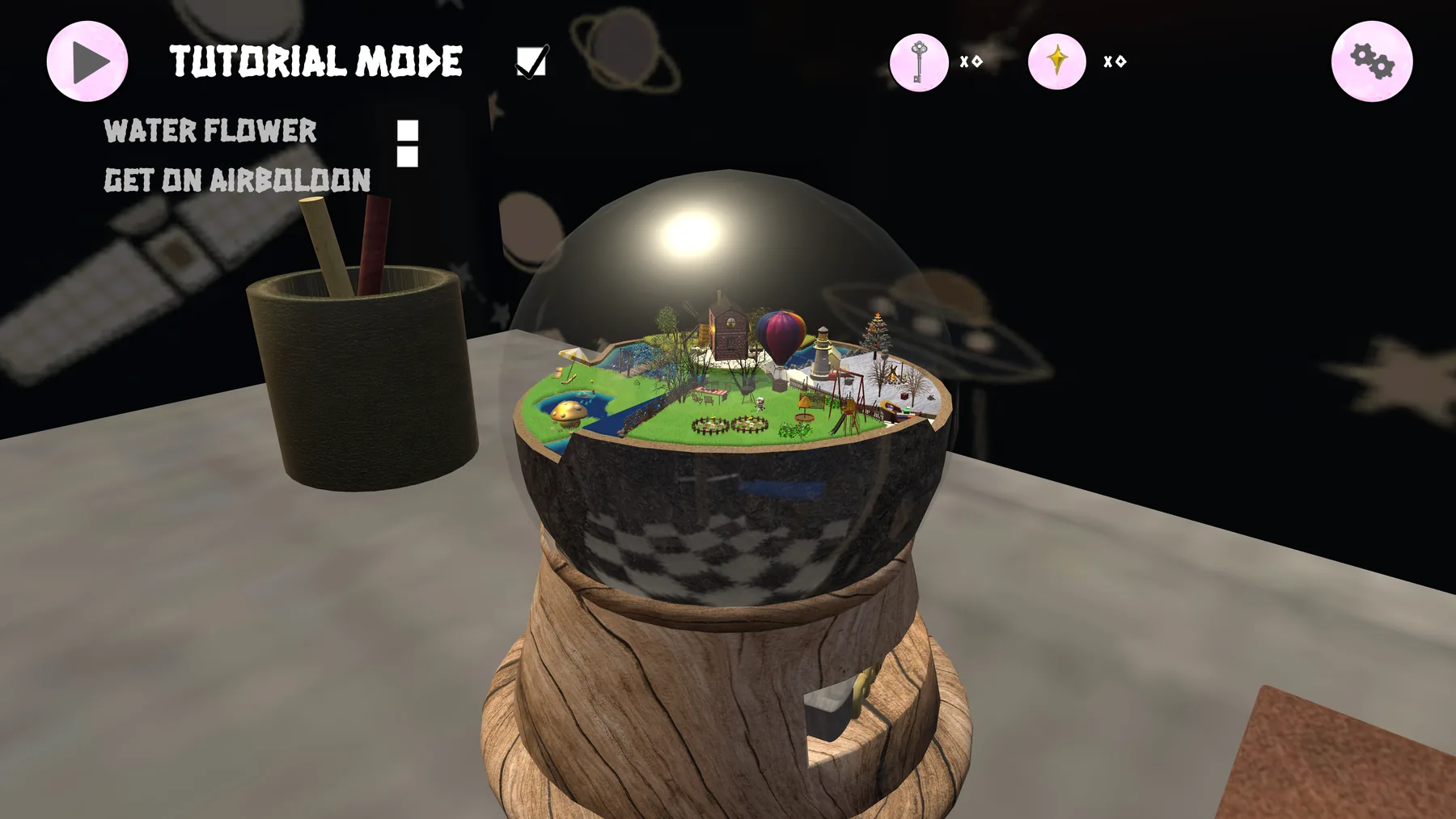
- A horizontal view was chosen: the player rotates and zooms the ball, much as you would handle a crystal ball in your hands.
System, UI and sound
A HUD tracks stars and keys. A tutorial mode handles task tracking and updates automatically. Settings cover sound and pausing. Buttons activate as progress unlocks them. Each seasonal scene has its own ambient sound, and overlapping zones blend the sound between scenes.
Technical appendix: navigation and shaders
Navigation and shaders.
Unity AI navigation
Character movement range is controlled through Unity's AI navigation, driven by two scripts: a point-and-click controller that calculates input, and a navigation algorithm that calculates path.
Shader programming
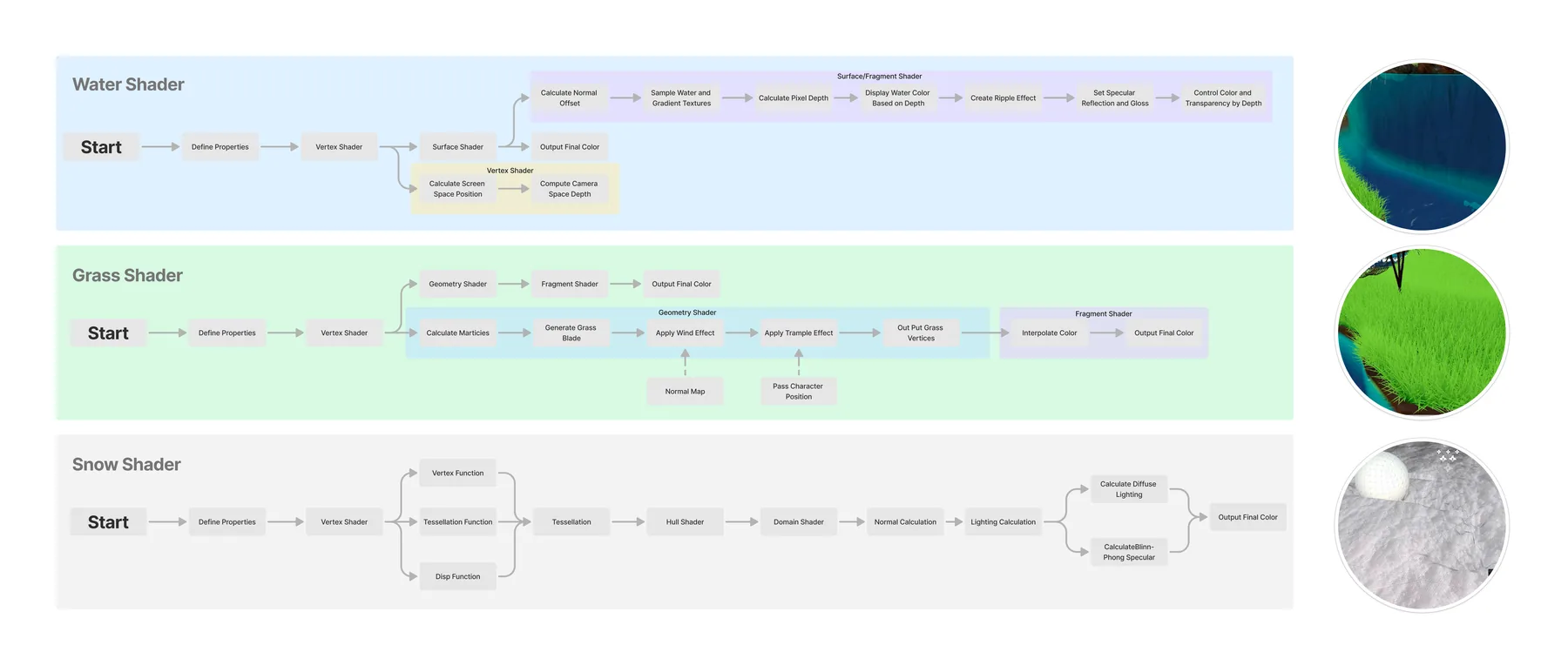
- Water: pixel depth and surface properties drive reflection, ripple and depth-based transparency.
- Grass: geometry and fragment shaders generate blades that respond to wind and trampling.
- Snow: tessellation and lighting calculations for surfaces with real depth.
Other technical work covered core interaction triggers, dynamic VFX, lighting, animation and scene control across the whole world.
Testing and release.
Beta put the game in front of players unfamiliar with the development process and surfaced problems with UI visibility, tutorial clarity and interaction responsiveness. The tutorial mode and several visual effects were added in direct response.
Release closed out the critical issues from beta, then optimised for performance and tested for stability across platforms.
Stills.