Temperament as terrain.
My second work shown at Arebyte Gallery, a year after Emotion. Arebyte's theme that year treated body, mind and soul as one identity, and this piece looks at temperament, the part of that identity people tend to treat as fixed.
The four temperaments come from the old, discredited theory of the humours, though people still describe themselves by personality type. The work places the visitor in four everyday situations and lets them notice how they behave in each.
The four temperaments
The theory goes back to Hippocrates (c. 460 to c. 370 BCE) and ancient Greek medicine, which explained character by the balance of four fluids in the body. Each temperament is named after the fluid thought to rule it. The work uses the four as images of energy, focus, emotion and harmony.
Sanguine
Blood
Outgoing and sociable
Choleric
Yellow bile
Ambitious and goal-oriented
Phlegmatic
Phlegm
Calm and patient, a peacemaker
Melancholic
Black bile
Thoughtful and inward-looking
Four spaces
Each space is an everyday setting with other people in it, since temperament shows in how a person acts around others.
The music festival
Exuberance and spontaneity: social energy, crowds, no schedule. This is the sanguine reading.
The office
Structure, discipline and focus, with an emphasis on logic and productivity.
The ballroom
Timelessness and introspection, with nostalgia, formality and memory.
The space station
Curiosity and intellect, with distance, contemplation and a sense of scale.
Together the four spaces cover the visceral, intellectual, emotional and transcendental sides of life.
Body, mind and soul as characters
Three characters stand for body, mind and soul, the theme of Arebyte's programme. Where each one wears its wings shows what it stands for.
Body
Wings on its feet, after Hermes, the messenger god.Movement and the physical world.
Mind
Wings on its head.Clarity, and control over thought.
Soul
Ethereal wings.Spirit and feeling.
The design draws on the four temperaments and on Jungian archetypes, particularly the Explorer, the Creator and the Sage. The narrative is non-linear and is carried mostly by NPC exchanges, environmental detail and lighting, so visitors piece it together themselves.
There is no test or result. Visitors cross all four spaces and notice where they feel at ease.
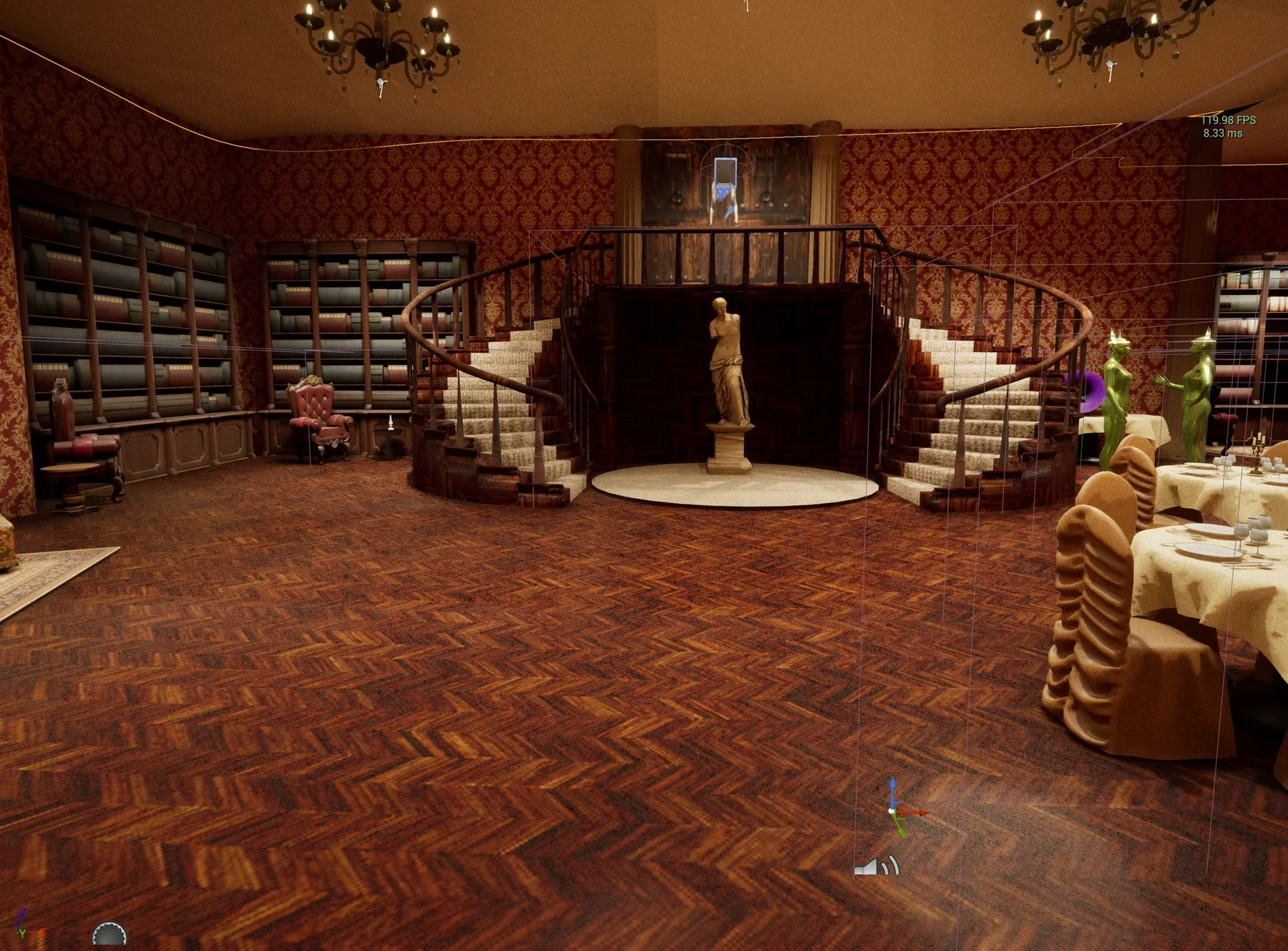
Shown at Arebyte Gallery, London, in 2025.
Shown in Assemblages of Being at Arebyte Gallery, London, in 2025, a year after Emotion at the same gallery. I wrote the wall text and designed the installation for the work as well as making it.
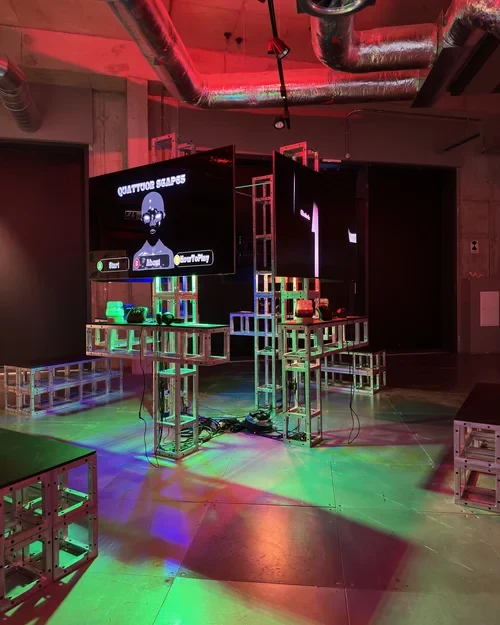
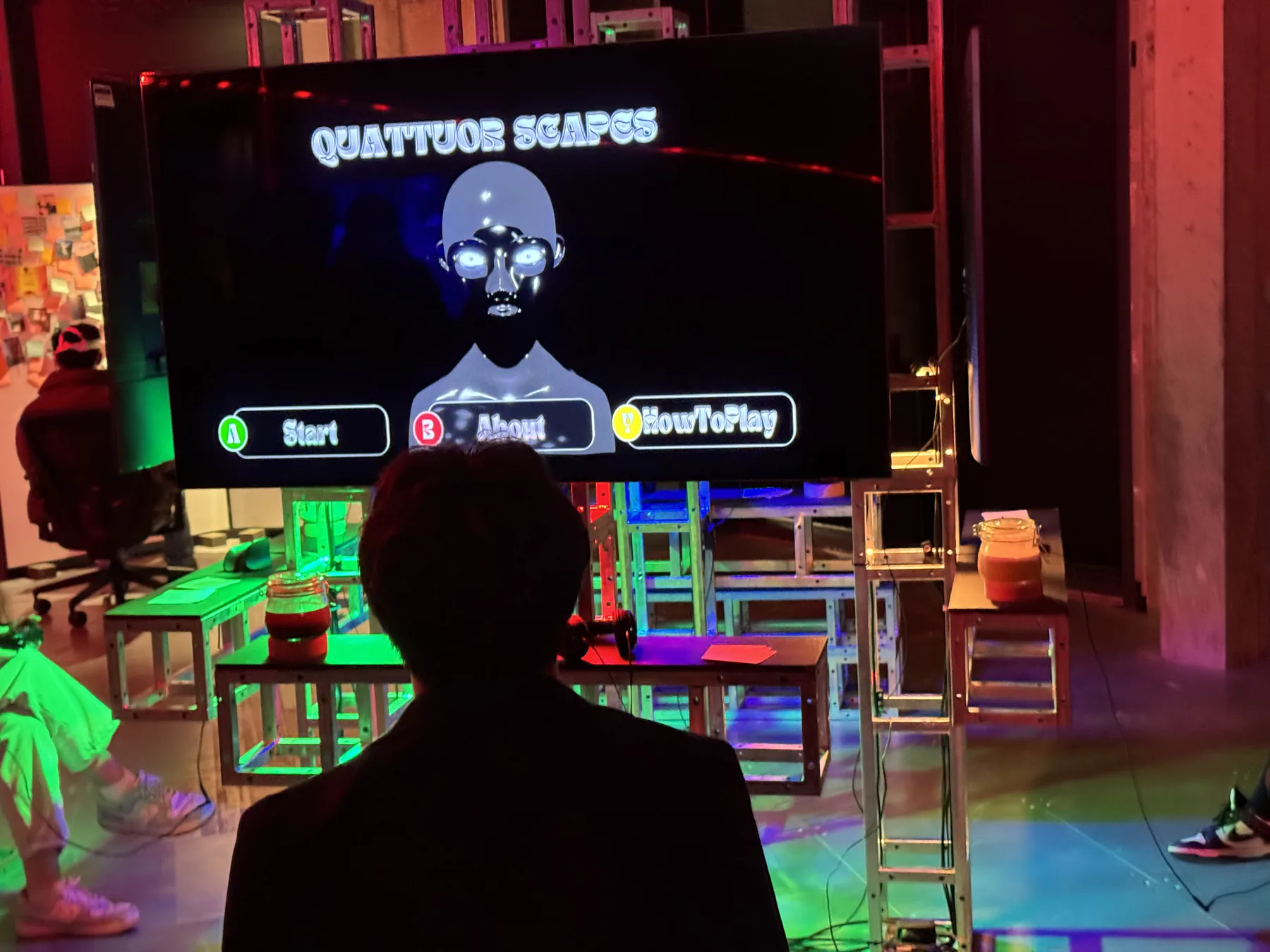
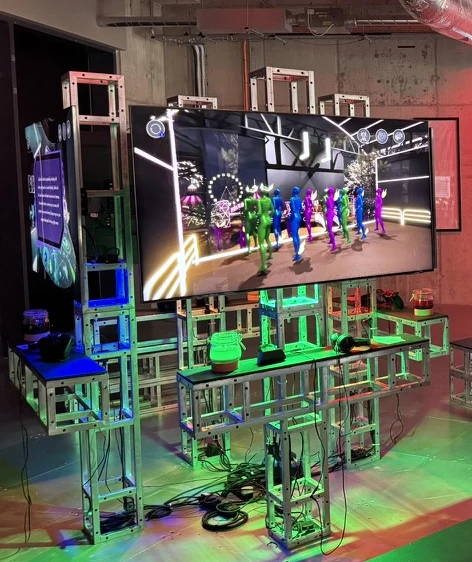
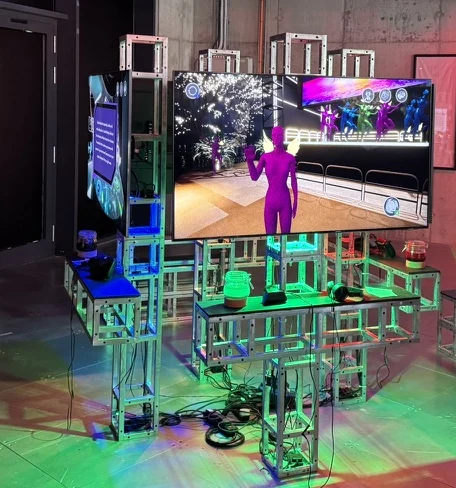
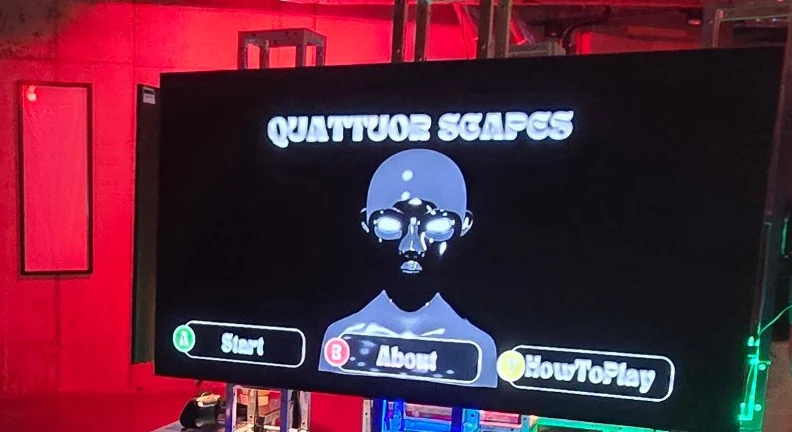
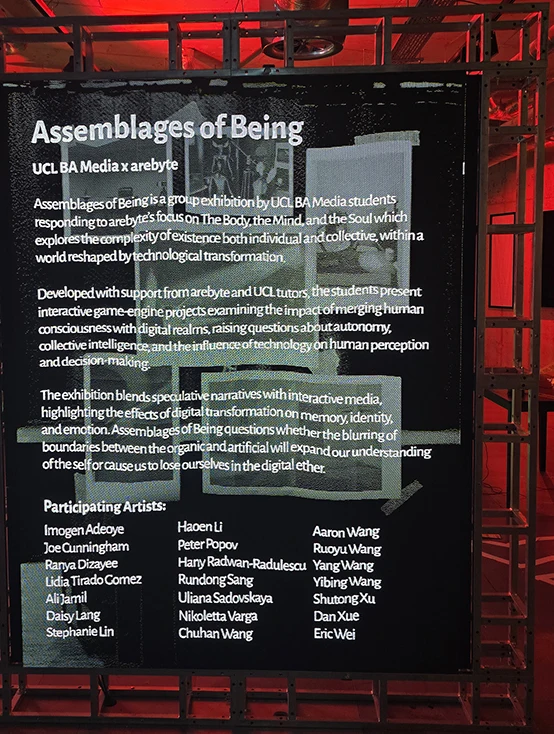
Technical appendix: four terrains in one build
I was technical director on a team of four, with one animator and two modellers. I directed the technical pipeline end to end and built the systems described below.
Core architecture
- Custom game mode with state management, so eight levels can hand off to each other without reloading the player's context.
- A dynamic character blueprint with physics-driven movement, and a first-person controller with custom input handling.
- Asset integration from Blender into Unreal Engine 5 across the whole project, including the UV, baking and optimisation conventions that kept the process repeatable.
Shaders
- Physically-based water with dynamic caustics and real-time reflections, plus a separate pool water simulation.
- Multi-layered glass with accurate refraction and optimised transparency.
- Procedural terrain with integrated grass and vegetation rendering.
Environment and atmosphere
- A dynamic sky system with atmospheric scattering and real-time weather.
- GPU-accelerated volumetrics for cloud, fog and light.
- Baked lighting workflows tuned per level, so quality stays consistent across all eight levels.
Effects
- Particle fire with dynamic light emission, GPU-driven firefly simulations, volumetric smoke. The festival and the space station carry most of these.
Levels
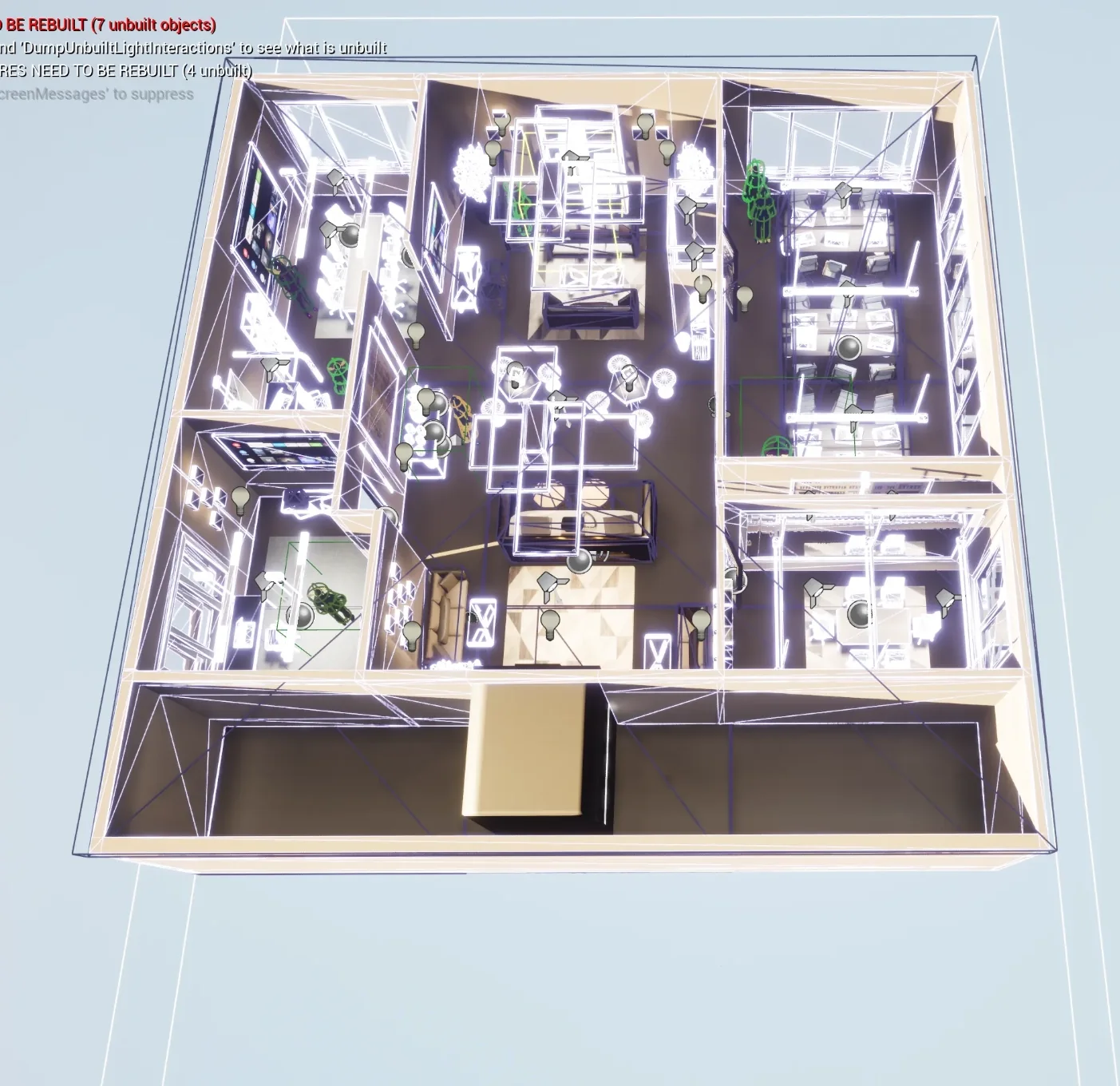
There are eight levels in total: an introduction that teaches the controls and sets the frame, an interactive quiz, the spaceship, the ballroom, office interior and exterior, the festival, and a final symbolic space.
AI and animation
- Custom navigation meshes with dynamic obstacle avoidance, and behaviour trees driven by state machines, so NPCs move around a room without every path being scripted.
- Blend spaces, animation blueprints across twelve character sets, and real-time IK for responsive contact with the environment.
Interface, audio, performance
- Thirty-four custom UI widgets with material-based effects, a dynamic HUD, an interactive menu framework, and the quiz system.
- A 3D spatial audio system, in-engine video playback for cutscenes, and an audio management pipeline. Voiceover recorded and edited in Adobe Audition; final video cut in Premiere.
- CPU and GPU profiling, memory management, frame rate and load time work, then packaging and validation for PC and console with platform-specific input handling.