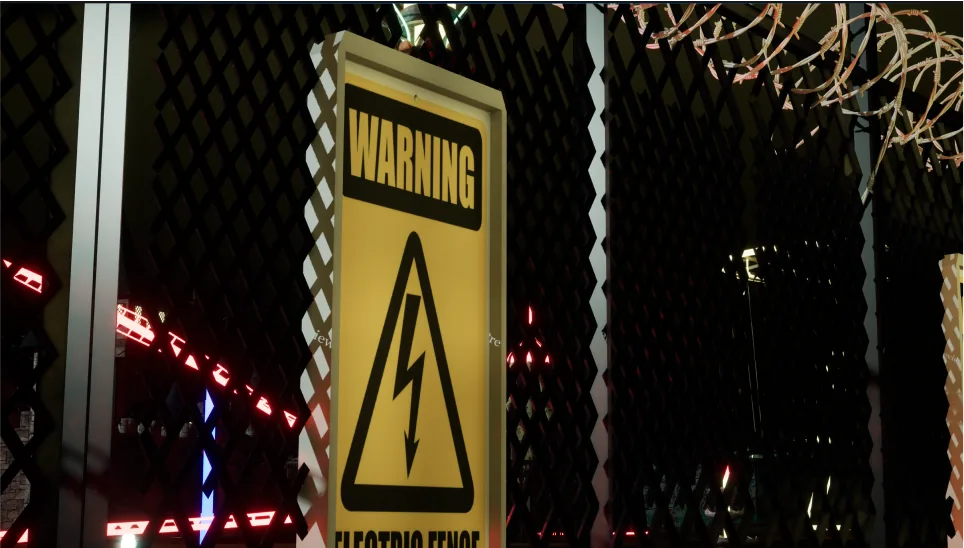
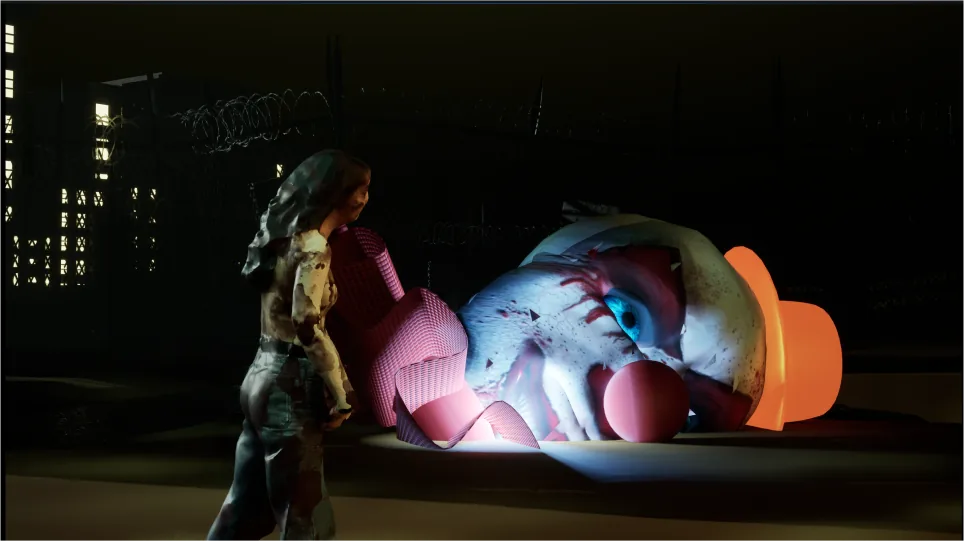
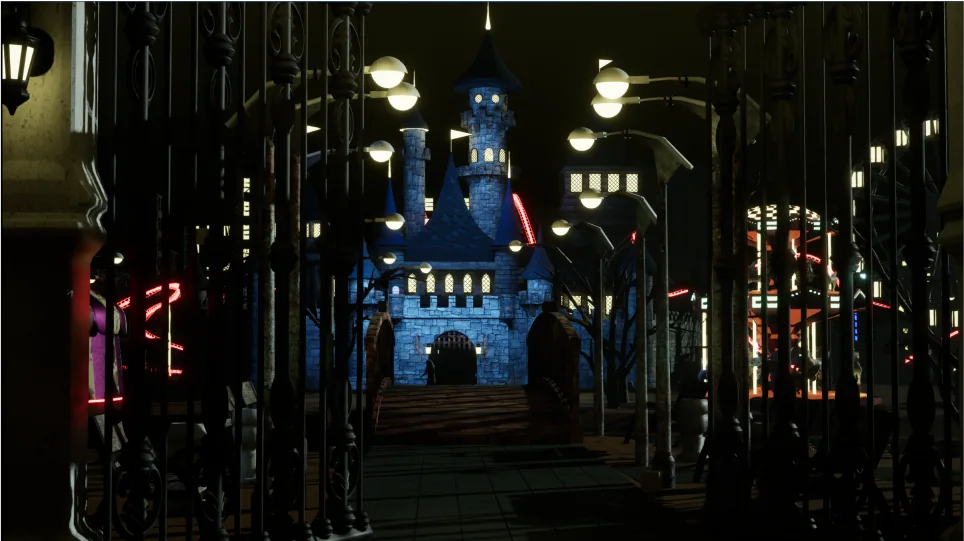
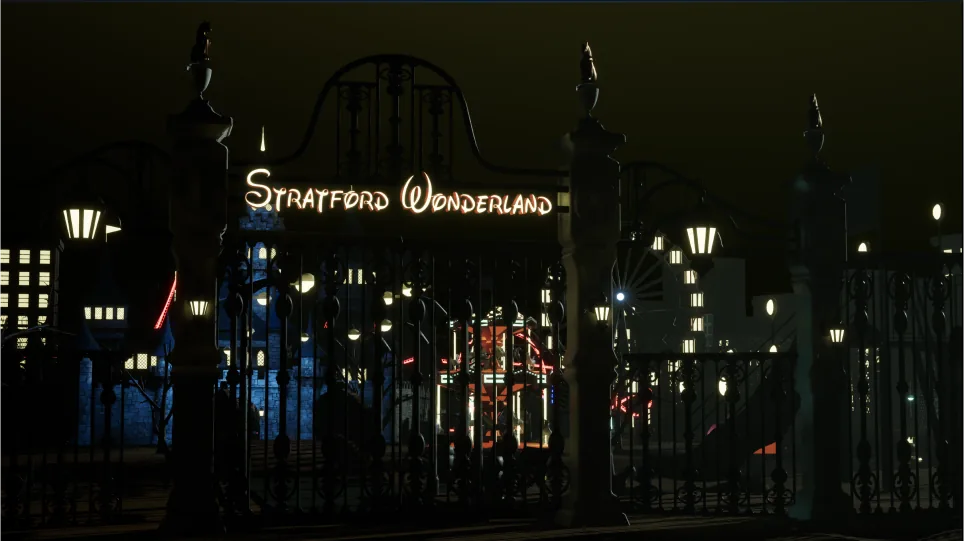
A VR work about Stratford.
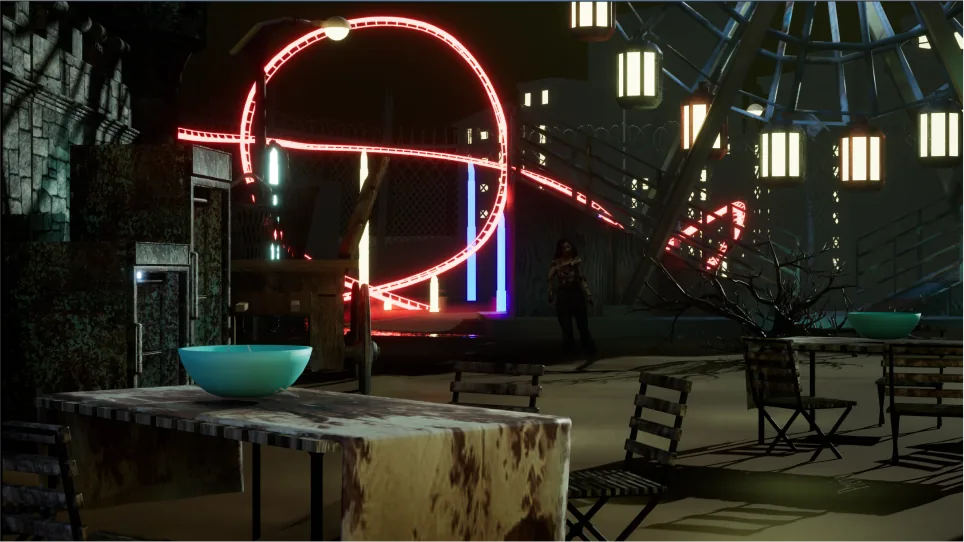
A site-specific VR work about Stratford, east London, and the gap between the regeneration it was promised and what arrived. The setting is an abandoned amusement park.
The terrain is traced from the area's heightmap and follows its real topography, including rivers and hills.
Research before level design
- Fieldwork: visits to urban ruins, abandoned parks and neglected industrial space; observation of real decay processes fed directly into texture and modelling.
- Archive: historical material on closed amusement parks, planning failures and redevelopment: images, maps and records, so the environments hold up historically.
- Community: interviews with residents surfaced personal stories tied to development and decay, which shaped the narrative and how displacement is represented.
No weapon
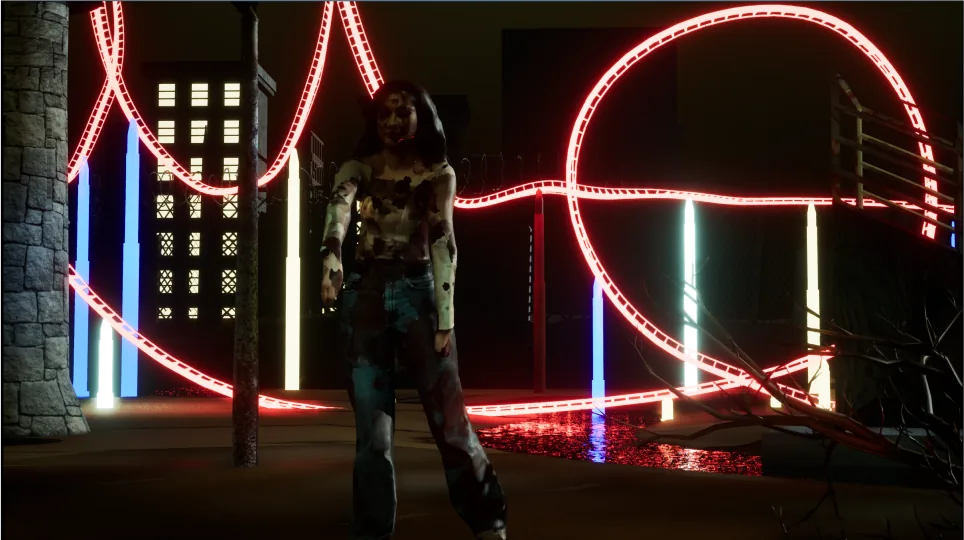
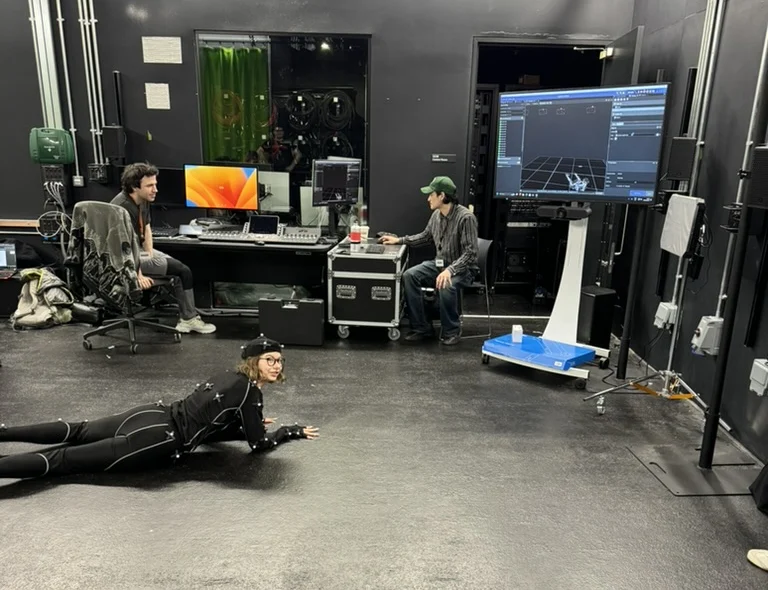
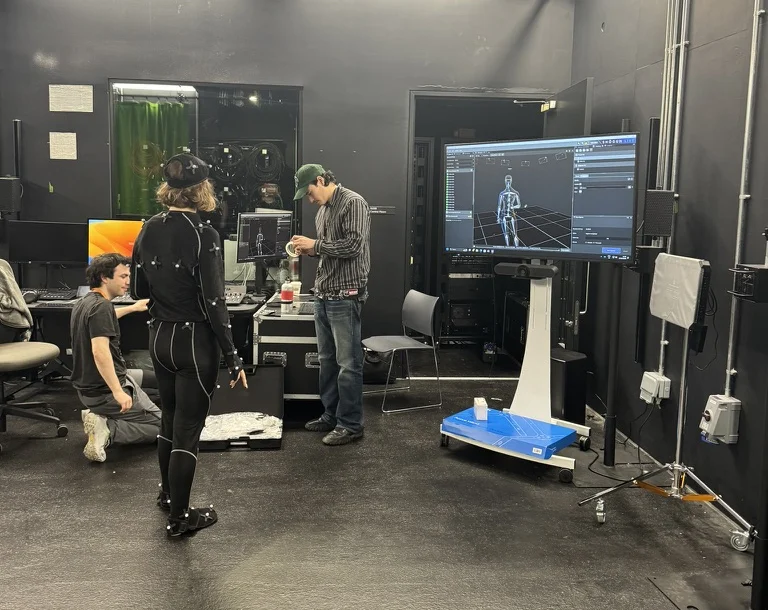
An FPS was considered and dropped, because a weapon would have removed the fear the environment is meant to create. The player has five minutes to escape. The NPCs chasing them are 3D scans of the development team, animated with motion capture.
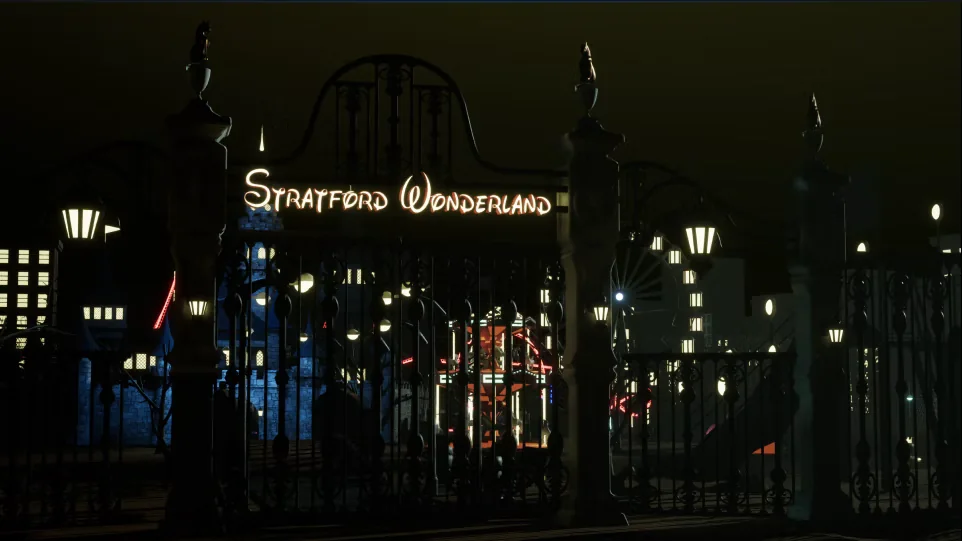
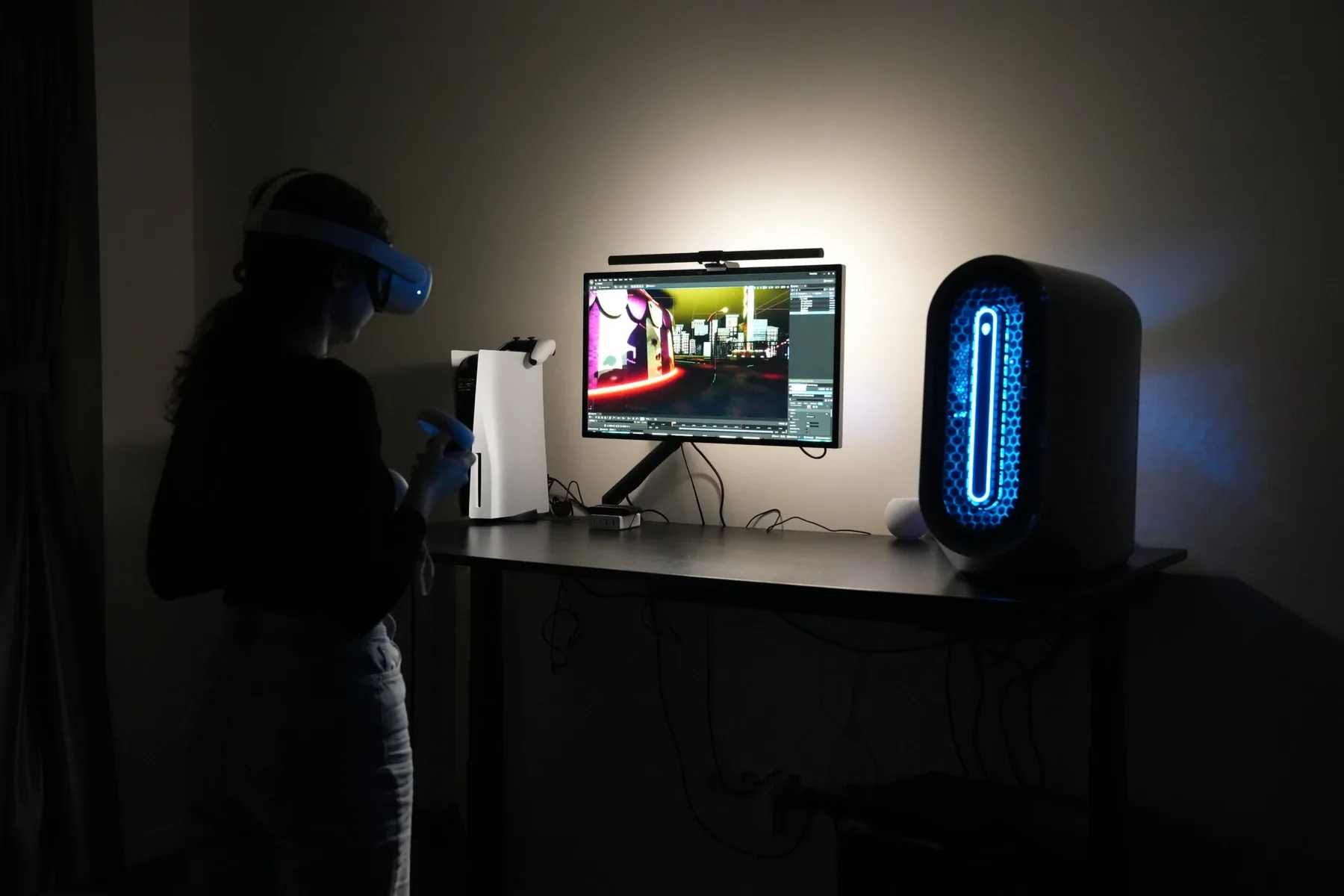
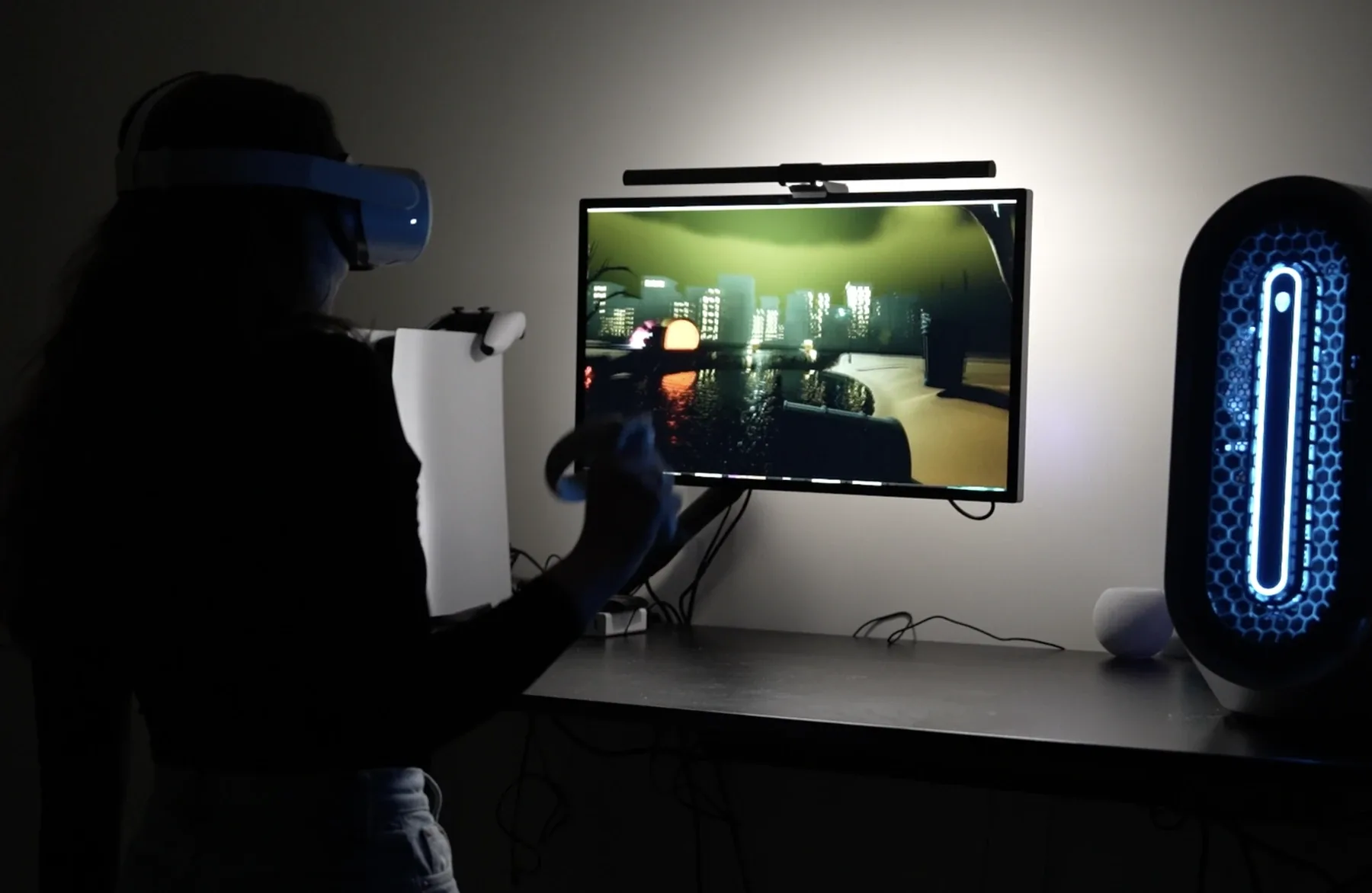
Themes and research.
Stratford Wonderland uses psychological horror, environmental storytelling and real-time technology to comment on urban decay.
Themes
- Environmental storytelling: derelict fairground structures, overgrown vegetation and decayed industry tell a story of abandonment, drawn from real closed theme parks and urban ruins.
- Psychological horror: uncanny visuals and fear of the unknown, created through limited visibility, disorienting sound and changes to the environment.
- Social critique: the abandoned park stands for promises that were not kept, touching on gentrification, environmental collapse and social marginalisation.
Research on the ground
- In situ: site visits to urban ruins, abandoned parks and neglected industrial spaces; observation of real decay processes fed directly into texture and modelling.
- Archival: historical research on abandoned amusement parks, urban planning failures and redevelopment, with archival images, maps and records used to design environments that hold up historically.
- Community: interviews with local residents surfaced personal stories tied to development and decay, which shaped the narrative and how displacement is represented.
Game design.
An FPS or TPS was considered, but a weapon would have undercut the horror. The game became an escape experience where the player has to survive five minutes.
NPCs move along set paths and attack. Any hit is fatal, but they are slow, so the player survives by watching and dodging them. All NPC behaviour is driven through Blueprint.
A level traced from real terrain
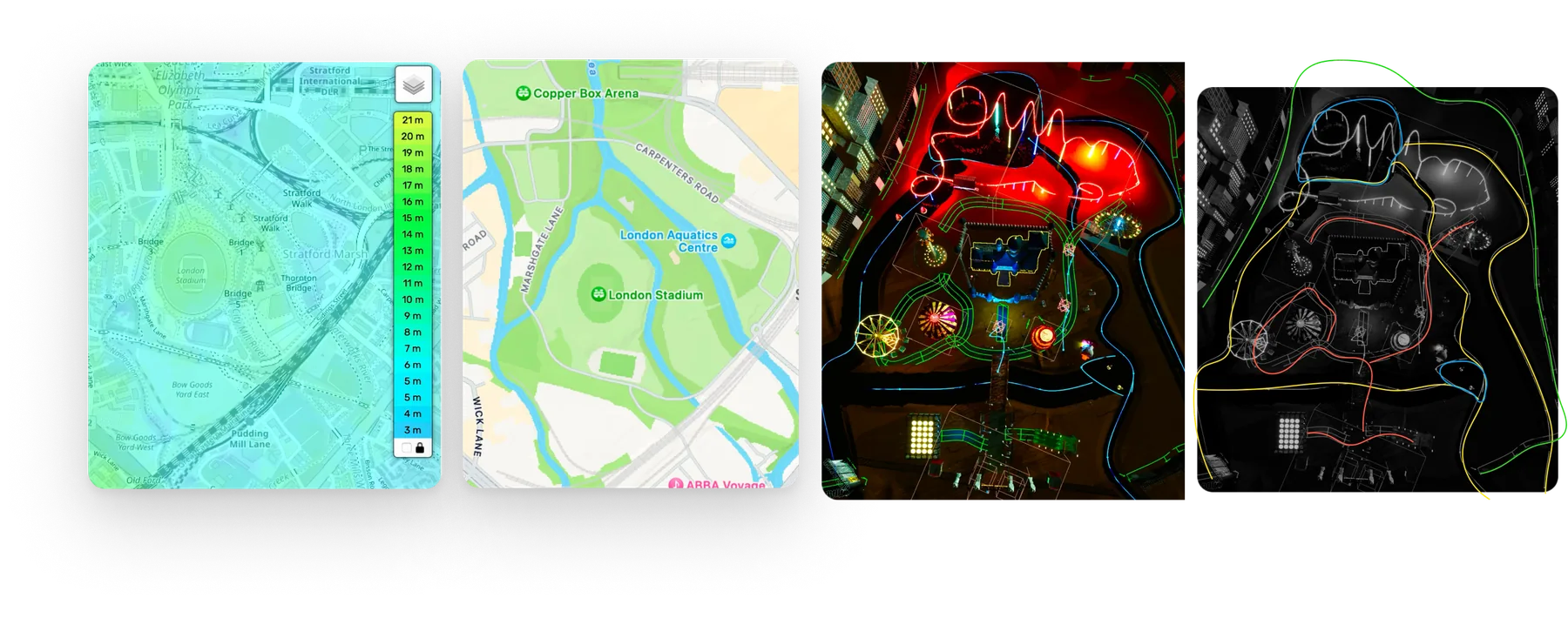
The terrain matches the real topography of the area, including rivers and hills.
NPC logic
- Models come from 3D scanning, animation from motion capture, behaviour from Blueprint.
- NPCs patrol predefined paths and areas.
- On detecting the player they pursue or attack depending on proximity and player action.
- If the player evades successfully they return to patrol; a hit moves the game toward failure.
Light as atmosphere
Daytime and dusk versions were tried first, but neither was frightening enough. The final scene is dark, lit with emissive materials, environment and world settings, volumetric cloud, and spot and point lights. Real-time point lights flicker under Blueprint control.
Technical appendix: systems, shaders and pipeline
Production pipeline
3D scanning
The game needed many NPCs, and modelling each one would have taken too long. We scanned everyone on the team into 3D models, which the art group optimised and textured. I brought them into Unreal and combined them with motion-capture animation.
Motion capture
Zombie movement is too detailed to animate by hand in Blender, so two crew members performed the movement, the animator handled post, and I integrated the results into Unreal.
Unreal implementation
NPC scripting was the hardest part. Sockets in the animation Blueprint made a weapon move naturally with a character's animation. The setup: animation imported from Blender with root motion, then an animation Blueprint, then a character Blueprint with looped animation to preview NPC settings in the project.
The project runs entirely on Blueprint (animation, character, pawn, actor, player controller and game mode), including the connection to the Meta VR headset.
Materials and VFX
Particle systems drive the clouds in the title sequence and the fly effect in the main experience. Image-based materials initially looked flat and reflected badly; increasing roughness and building normal maps gave them the depth the scenes needed. Emissive materials do much of the lighting work.
VR
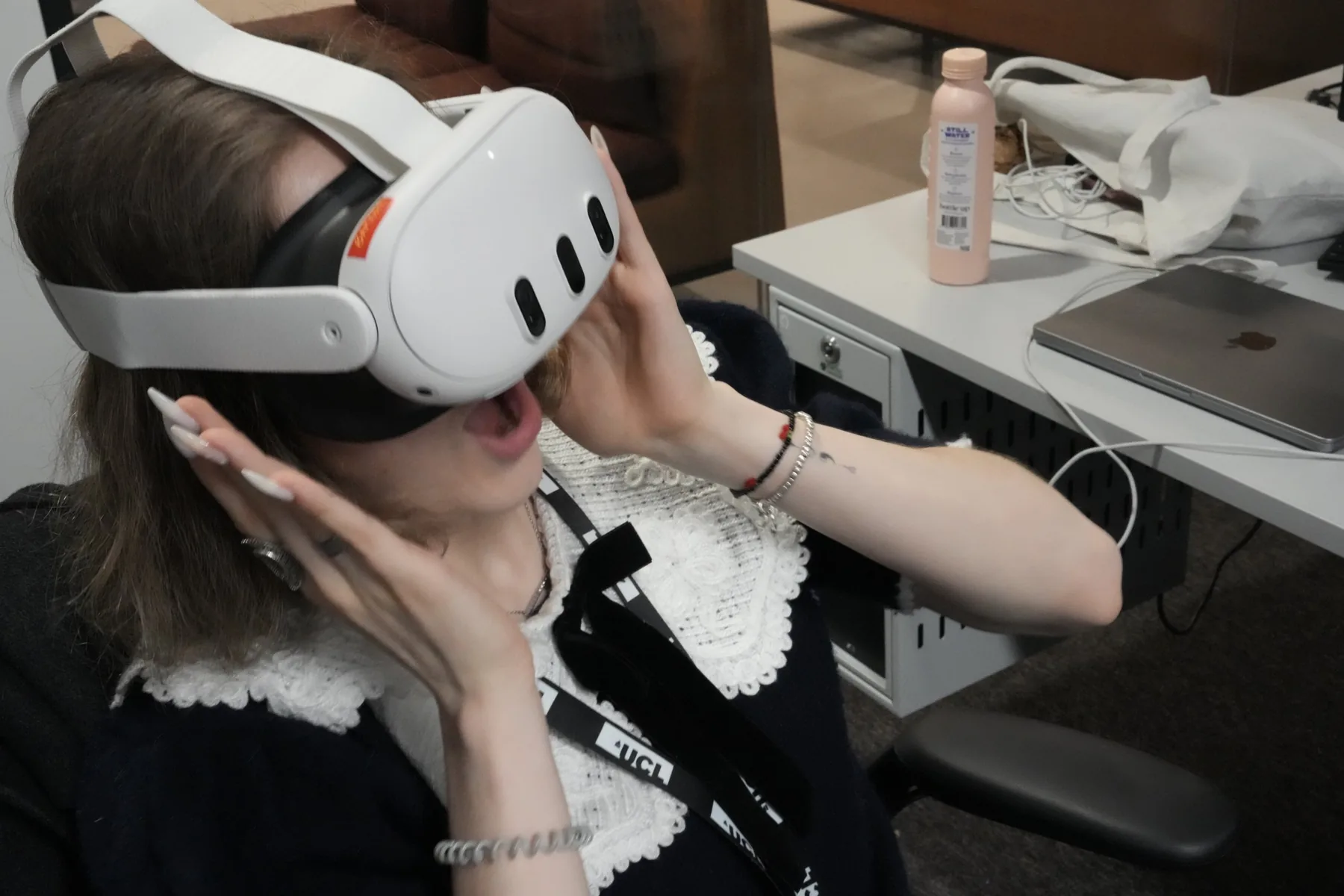
The horror direction came out of the decision to make the work in VR. In the headset, the player can look around and move freely. Every building has collision and triggers, so the player cannot walk through walls or fly, and moving through the space triggers the music.
Testing and iteration
Cesium and the opening
Cesium was used to create a sense of flight, which matches the later passage through cloud.
Using Cesium, we made a short introduction film that moves the viewer from the real world into the digital one before the experience begins.
Stills.